Category Archives: Illustration

Can I coach you? (Part 1 of 2)

coaching_lores

Are you passionate about multiple things? I bet you are.  Arts and tech. Food and design. Gardening and games. Yoga and cat-whisphering, perhaps?

For me, it’s art and helping people. I’ve mentioned this several times here, but I worked for a social service organization for domestic violence victims for 14+ years until this past July. I had many positions throughout the years. Admin support to direct service to program management to HR to sum it all up.

I had many reasons to why I stayed there for so long, but at the end of the day, I liked helping people. I felt so honored to be there for people who were going through tough times. Many people who came to our programs had gone through horrendous, heart-wrenching violence, physically, mentally, and spiritually, at the hands of someone they loved. And the hardest part of intimate partner violence is not always physical. Most physical scars heal – but the toughest part is the emotional and spiritual scars. You can’t show them to anyone, and it takes longer to heal. Repeated violence and control destroy who you are inside.I heard many times from the survivors that they’d wished their partner would’ve just hit them.

When I was doing direct service work, I always worked in the community-based program and not in the shelter program, so people would come in to the office for one-on-one meetings and support groups while they lived at their own home. When they first come in to meet with me, a lot of them are just a shell of themselves, feeling confused, tired, scared, and worthless. They want the violence to stop but don’t want the relationship to end.

They’re often told by their family and friends that they should leave or call the police. Or be strong and stand up to their abusive partner. Though these people are trying to be helpful by giving these kinds of advices, it can be very disempowering for the victims and feels like yet another person is trying to tell them what to do.

So the first thing I would do when they first come to me is to listen.

I would listen intently to understand their situations. And for many of the people who come in, that’s the most powerful thing anyone can do. Even though they had to go back to their not-so-happy home at the end of the day, it was so valuable that someone listened and understood what they were going through and not judge them or their decisions.

I believed in the advocacy based counseling model we use when working with our clients. We listen without judgement and meet people where they are and support their ability to choose what’s best for their unique situation. We don’t tell people what to do or what not to do. We listen, offer options, and discuss pros and cons of each option. For many people, leaving their abusive partner is not the best or the safest option. So we’re there to help brainstorm different ways to stay safe for as long as they need to.

Some people just call or come in once, and we never hear from them again. But other times we get to work with them long-term. They start to acknowledge the injustice their partner had put them through. They recognize what happened to them was not their fault. And most importantly, they start trusting themselves again.

In my recent years, I managed general HR stuff at the same organization. Among other things, I enjoyed helping employees reach their career goals the most. I developed and facilitated a group for employees so they can explore their passions and skills and work towards their big goals. It was so rewarding for me to help them understand how their everyday work was moving them towards their career goals. Though I’m not there any more, I know many of them have moved into a different position that supports their big career goals. YAY!!!

So, as I was leaving my day job this summer to be a full-time artist, I thought, “how can I combine my passions and skills to maximize my earning potential?” You’ve probably heard the advice, “diversify your income stream,” somewhere. Don’t put all of your eggs in one basket because if something bad happens to that one basket full of eggs (I’m assuming raw eggs), you’d be in a BIG trouble. Lots of artists diversify their income source by doing client work, selling products, teaching etc.  What else could I do?? Hmmmmm….

Oh, I got it!  I could coach people!

Creating art and helping people are two of the things I enjoy and am good at. Isn’t the point of being your own boss to be able to decide how you’re going to make a living?

Coaching seems like a really good fit for me. Instead of helping people in violent situations or employees, I can help other artists, makers, and crafters stay on track and get stuff done so they can reach their big dream goals.

“What is coaching?” you may be wondering. There are different schools of thoughts, and each coach would approach their work slightly differently. But basically, coach is someone who can help you set goals and be successful by drawing out your strengths and helping you find your own solutions for the challenges you experience.

Here is what it would be like to work with me as your Creative Coach (yup that’s what I’m calling myself):

  1. Our coaching session will be one-on-one conversation over Skype or phone.
  2. I’m a nice person (and a good listener), who actually cares and wants to know your story and the unique struggles you’re having in your creative pursuit. You won’t be laughed at or ridiculed, I promise.
  3. I’ll ask you a bunch of questions about your dreams, goals, and ideas because I’m curious about you and what inspires you. In the process, you’ll definitely learn more about yourself! Oftentimes the answers you’re looking for are within you, but you just need a little extra help to realize it.
  4. You can come with an overwhelming list of things to do and leave with clear, bite-sized action steps to work on, feeling lighter and inspired!
  5. You’ll get a reality check. If you tell me you’re thinking about taking on a new client, launching a new product line, and saving 100 kittens from an evil monster all in the same week, you’re gonna hear what I really think about that. I’ll help you decide where to focus your energy and time first. (FYI – I’m a cat person but am not gonna impose my personal preference on you during our coaching sessions…)
  6. You’ll have a reliable source of accountability and encouragement. Our conversations will be focused around your goals, and I’ll ask you to keep track of your progress and challenges in between. We can also discuss ways for me to provide extra accountability outside of our sessions if needed!
  7. You’ll have someone to bounce ideas off of and problem-solve with in a non-judgemental environment. Like my point #2 above, you can usually find the answers by looking at your problems from different angles. My goal isn’t to tell you what to do or what not to do. It’s to help you come up with your own solutions that work best for your unique situation. After all, those are the skills you’ll need long-term, and you’ll be more likely to stick to the solutions you come up with yourself!
  8. You’ll have someone to celebrate your small and big successes with. It’s important we take the time to acknowledge your accomplishments when you’re working towards your big dream. I’ll notice them and point them out to you even if you don’t think it’s significant.
  9. I’ll teach you what I know about having an art/craft-based business. I don’t consider myself to be a business expert by any means. I can’t give you a blueprint for your business success. But I’m more than happy to share with you tips and tools that worked for me and give you my feedback if you’d like. You can choose to apply it (or not) to your own situation. You’re the expert of your own life! If you’re looking for specific business advice that is beyond me, I’d suggest you work with a business consultant who specializes in the area you’re seeking advice.

Ok, if any of these things sounds good to you, ask yourself these questions:

  • Do you have many creative passions and don’t know where to start, so you end up starting nothing?
  • Do your friends and family tell you you’re creative/artistic?  Are you wondering if you should take your “hobby” to the next level?
  • Do you start new projects but have a hard time following through?
  • Do you wish you had time or motivation to make art every day?
  • Do you want to pursue your creative dream while having a day job, family, and other obligations?
  • Do you want to transition out of your day job and pursue your passion full-time eventually?
  • Do you perform better when you know someone else is counting on you to show up?
  • Do you say yes to every opportunity and feel resentful and stressed as a result?
  • Have you been pursuing your creative passion for a long time and haven’t seen any results? Thinking about giving up?
  • Do you compare yourself with other “successful” artists and be hard on yourself?
  • Are you serious about making your creative dream come true?

If you answered yes to any of these questions, having  a Creative Coach could really help!

I’ve been running a pilot of my Creative Coaching service for the past few months and am happy to see the positive impact our work is having on my clients so far! I’ll share more about their experiences in my blog post next week 🙂 Don’t miss it if you’re curious about working with me!

I’ll be taking on new coaching clients beginning February 1, 2016 and you can sign up here to receive updates and be the first to know when I officially start booking sessions!

I’m super excited to have found a way to combine my passions and help you be successful! Stay tuned for part 2 of this blog post next week to hear from my awesome clients 🙂

Take care!

xoxo Yuko

yuko_flowers


On Jealousy

jealousy_loresI was at a craft show a couple of months ago. I was all prepared. I worked really hard to make lots of stuff to sell, and they all looked really cute. I sold lots of the same things at the previous show so I was hopeful that people would go crazy for my stuff again. And…

It bombed.

People would come by and look at my stuff. They would tell me my stuff looked great and how much they liked them. But I ended up making a very small sales at the show. Meanwhile, my neighbors were having a great show. People were buying things from them left and right. And it was one of the other vendors’ very first show, too.

I was happy for them. They had great crafts and deserved success. And I was jealous. I was  jealous of their success and felt very insecure. I felt like all of my hard work was wasted. It was an extremely busy month for me, and all that time and resources returning poor results was very discouraging. I couldn’t quite figure out what went wrong. Is this how it’s going to be forever?

The answer is, no, of course it won’t be like that forever. Because no one, not even a super-duper psychic, could tell you what’s going to happen 100%.  I’ve done a handful of shows now to know there are many factors that determine if it’s going to be a successful show. But even if you do all the homework, you don’t always know for sure how it’s going to go.

In a moment, I could intellectually understand that it happens. It could be hit or miss, and I missed. People were going out of their way to tell me they liked my stuff, and some people did buy stuff from me. Just because not everyone wanted to buy from me, it doesn’t mean my work is bad. And there were other vendors who had beautiful things, and their sales weren’t going so well either.

When you see other creative people being successful (i.e. making more money than you, or at least you think they do.), it’s a very natural human reaction to feel jealousy. It’s OK to have positive or negative emotional reactions to anything. It’s important, though, that you notice it when you start creating stories that may not be true. Especially unhelpful ones that will make you feel small and keep you focusing on what other people are doing rather than what you can do to grow.

You can be happy for them and maybe learn a thing or two about what they’re doing – attractive display, their interaction with customers, how they price their products etc. etc. But don’t put any more subjective judgements or beat yourself up about why it didn’t go well for you.

When you see other people being more successful, in this scenario at a craft show, the only observable fact you have is that they had more customers buying from them than you did during the time you were there. That’s it. The rest of the story is made up in your head. Some of it might be true, but you don’t know that.

The truth is, you’re only seeing a snapshot of their life at any given moment. Social media is a great example of that. People, including myself, tend to curate what they share on social media. Especially as a business or brand, you have to curate what you share. And it creates an illusion that everyone is doing so well and happy and successful all the time when in reality that’s simply not true.

We all have ups and downs. What you may not be seeing is the problems they are having with their families. Or many unreturned emails and phone calls from art directors. Or first 5 years of their career where nobody knew who they were. Maybe they only sleep 4 hours a night and feeling grumpy all the time! Who knows what people are struggling with?? I’m all about being a real human being on the internet, but I’m still thoughtful about sharing only relevant contents.

Like I said,  we all have these emotionss, and it’s OK to have them. But how can you manage them when it’s doing more harm?

When I feel jealousy, it’s often accompanied by a little bit of sadness and envy. Sadness because I put in a lot of time and energy into something, and it didn’t work the way I had hoped. So it’s a combination of sadness, disappointment, and a little bit of loss. Envy because I wish I had what I perceive the others have. I’m saying “perceive” because I don’t really know for a fact if they have what I think they have.

What’s at the core, though? It is the fear that I’m not good enough. There I said it. The big, scary monster that lives in many of us. The fear and self-doubt creep in as soon as you see a sign that things might not be going as well as you’d hoped. It hurts. Somehow you’re drawing a conclusion internally that “being unsuccessful” equals “being unworthy”, which is totally a separate thing.

So, what do you do to fight it?

My somewhat Yoda-like answer is “don’t fight it” but accept it and be OK with it.

Or more like be OK with you feeling jealousy and all the other “negative” feelings. It’s kind of like looking at all the emotions as tiny individual you inside – oh, like the movie Inside Out, which did a great job of portraying how all emotions, even the negative ones, have their purposes for human growth and development.

So when a part of you is hurting, blaming yourself or being hard on yourself for having these feelings are counterproductive. This could be emotionally intense for some, but you could imagine yourself as a child or a younger person and try to be compassionate and kind to yourself when you’re having these reactions. If it’s too much, you can also imagine talking to your best friend who is being hard on themselves for something they didn’t have control over. Do you want to belittle them and tell them to snap out of it, or do you want to give them a hug and tell them you’re sorry things didn’t work out as they’d hoped?

To me, that’s the first step of getting over it. See it for what it is. It’s not good or bad. Cut yourself some slack. Be kind to yourself. You’ll find that once you give it some space, rather than ignoring it or trying to shame it out of your mind, it’ll quiet its voice eventually, and you won’t be thinking about it as much.

I’m getting better at this as I get older. I’m constantly learning from my life experience, and meditation or some kind of practice to be present also helps me. I used to be an avid meditator. Going to a 10-day silent meditation retreat in 2014 was one of the best things I did for my personal development. It did many things a few years of therapy couldn’t do! I don’t sit and meditate for two hours a day any more, but when I notice my anxiety or stress building up, I zero in on the sensation of my breath going in and out of my nose. Focusing on that tiny area of my body for just a split second can bring me down to the calmness just like that. It’s pretty magical and super empowering.

Other tools and resources to work with jealousy and other unhelpful thoughts:

1) I wrote this blog post about not comparing yourself with others on the internet a while ago. Give it a read if you haven’t yet.

2)  I love this book Your Illustrated Guide to Becoming One with the Universe by Yumi Sakugawa! I love her beautiful art and her message of compassion and kindness to self.

3) Keep praises and encouragements other people have written to you, and look at them when you need a little boost. Sometimes you need to look at the version of you that other people see to be able to recognize it for yourself. Isn’t it funny how that happens?

4)  Ask yourself: Is this helping me become a better artist/business person/who I want to be? Your answer is probably “no.” You only have 24 hours a day like the rest of us. Do more of what helps you achieve your goals and less of what holds you back.

5) Seek a professional help. I’m a big fan of therapy. I’ve worked with a couple of amazing therapists who changed my life. When your emotional ups and downs are causing you to have problems in your health, relationships, and work – or even if you just need an on-going support to maintain your emotional wellbeing, working with a trained professional is a huge help. It’s not a sign of weakness. It’s a sign that you’re not afraid to ask for what you need.

Now go out there and do your thing!! I know you can 🙂

xoxo Yuko

yuko_flowers


Will you be my accountability partner? (Part 2 of 2)

accountability-partner02_lores

Hi!

I hope you enjoyed my interview with my friend and my accountability partner, Whitney Thoren, last week! It was nice for me to hear from her what her experience has been, and it also validated my reasons for having accountability meetings.

So, today you’re going to hear from my other (and original) accountability partner, Stefanie Robbins. Stef and I go way back. We were also co-workers at our old day job doing direct service for survivors/victims of domestic violence. We remained friends after she moved on to different things several years ago.  By the way, many people have told me I keep in touch with my old co-workers/friends very well. And it’s true 🙂 As adult, I don’t meet new people or make new friends very often, so ones I like I want to keep forever!


Earlier this year, I was itching to get an accountability partner. I’d been an avid listener of Seanwes podcast, and they talked a lot about accountability meetings. (Note: this episode focuses on why, how, and what of accountability partners if you want to learn more!)

I started thinking of who would be a good match for me. It needed to be someone I like and trust, someone who is working on creative goals, and our personalities have to work well together, too. And ideally, someone who lives nearby (I hate driving.)

And guess what? Stef met all of my accountability partner wish list!

So I began writing her an email asking if she’d be interested in being my accountability partner and meet regularly to check in on our goals. I was SO excited to reach out to her because I just knew our meetings were going to be awesome.

She responded to me with an interest, and we had our first meeting in March of this year. We’ve been meeting monthly since then. We typically meet at a coffee shop in our neighborhood and check in about how things are going and how we did with our goals. We support each other and help set goals for our next meeting.

I really appreciate her warm and friendly personality. She’s honest and kind. I also feel honored to be part of her support system because her music is so amazing and powerful! Every one should receive the gift of her music 🙂

I’m friends with both of my accountability partners, so we do talk about personal stuff, too. I feel I can support a person better if I have a bigger picture of what they’re going through outside of their career/creative goals. However, that’s more my personal preference, and it just works better that way with friends, so if you want to keep your accountability meetings more business, I think that works just fine, too.

OK, enough introduction from me!  Here is Stefanie!

Stef photo

Please introduce yourself to my readers. Tell us a little bit about yourself!

Hi All! I am a mama, a musician, a therapist and each of these identities are front and center in my life right now. I have two children ages 5 & 9 and, as a family, we stay very engaged in our school community, Jewish community and neighborhood. I work half-time at a community mental health agency providing counseling to young people ages 5-22 and their families.

Since I was a child I was singing and making up songs. I started voice lessons at a young age, participated in choirs and musicals, attended a specialized performing arts high school and began University as a Music Theater Major. As I was “launching” into young adulthood I had a crisis of confidence (maybe it was pragmatism?) and stopped most avenues for performing that were familiar and had a structure I understood.

For a while, I dabbled in a bands, songwriting with friends, and “a Capella” over the next few years but nothing really stuck and filled the music (on a soul level) and I was aimless. Other parts of my life were blossoming at their own pace and, over all, going well – personal identity, career, a wonderful partner and marriage, house, kids – but something was deeply missing and it was music.

Something shifted in me after having my second child and I knew I needed to pursue my music goals and reach my own potential. The universe aligned and many of my fears and questions got the attention and answers needed to press on. I continue to do daily work on resistance and pushing through my doubts (some days are easier than others) and struggles and have found mountains of support from friends, family and a community of artists/musicians.

I completed my first EP “In the Sun” and am currently working on my first full-length album with the goal of recording in January 2016.

Why did you decide to become my accountability partner? What were your initial expectations?

Yuko initiated the conversation about being creative accountability partners and a few things helped me reach the decision to say yes. First, being asked! That is a huge piece of the puzzle! I was inspired by Yuko’s courage to be an artist and because I know Yuko to be reliable and kind, so I felt it was safe yet there was still a little jump to trying something unfamiliar.

I was familiar with the idea of mentorship and have enlisted support of many more experienced musicians for guidance and advice. What was different about Yuko’s ideas is that it is a partnership. My expectations were that we could support one another in our individual goals and that when we listen and teach each other, we learn and apply it to our own stories as well.

How has having an accountability partner helped you? Any examples of the changes you’ve noticed or progresses you’ve made in your own practice since you started meeting with me?

Having accountability and specific, concrete steps toward meeting lofty goals has been incredibly helpful. I have set goals in the past but often left too much time in between the goal and the deadline. With this model, we meet monthly and set baby-steps toward an overall bigger goal. One example of a change I made because of this partnership is when I was approached to do a performance for a non-profit that would also help me raise money for my album production and I was afraid to say no and lose the opportunity EVEN THOUGH my schedule was packed with other shows that were taking a lot of time and energy that I needed.

Through the accountability partnership I learned to shift my ideas around timing – not doing everything NOW is ok – but looking at the ways I can move things to fit what I am capable of doing. I reached out to the person who asked me to perform and suggested we revisit the idea in the fall and that is what we did. It worked out and we are in conversations now about how we can work together.

In your own experience, what are the most valuable things about having an accountability partner?

The infusion of energy and intention around my music and goals is incredible. I may come in to a meeting thinking I have not done enough that month or that I am off track but the point of meeting is to explore what I HAVE done (and to celebrate that) and what barriers were in the way (mental, financial, health, etc.) for what I haven’t yet done.

I find it very pragmatic and goal-oriented but also validating and supportive of where I am now.

What do you think are important to look for in an accountability partner?

I believe the things to look for are a person who be consistent (monthly works for me, about 60-90 minutes), a person with non-judgmental approach, and an active listener, practical and lofty (able to hold both), some ability to be vulnerable and share their own stories and struggles, someone who is invested in their own goals and can relate to what the other may be experiencing.

Any words of wisdom for someone who’s thinking about having an accountability partner?

Find someone who inspires you and approach them with the concept. You may be really surprised but many people are willing to be part of your support network if you ask.

And where can people find you?

Oooh! Self-promotion, yay! Uncomfortable! Necessary!

I have a website or I can connect with you on Facebook

Wonderful!! Thank you for taking the time to share with us! 

Do you have someone to check in about your goals? Find someone if you don’t! It’ll totally boost your motivation, and you can do the same for them too.

FYI – If you just can’t find someone in your community, I’m working on launching exciting new services to help provide on-going support and accountability to people pursuing their creative goals early 2016, so stay tuned!

Have a wonderful day!  See you next week.

xoxo Yuko

yuko_flowers


Will you be my accountability partner? (Part 1 of 2)

accountability-partner01_loes

Hey friend,

I’ve shared in my past blog posts about how my accountability partners have helped me stay motivated and focused on my goals.

Accountability partners are someone you meet regularly to check in about your goals and provide support. Maybe you don’t need any external support to achieve your goals, but many of us do better when you know someone else is counting on you!

I used to practice Bikram Yoga (a type of hot yoga) a lot. The instructors often said “showing up is the hardest part of the practice” and it’s so true. You know it’s going to be hard. In the beginning of the class, I always thought “Why am I here? I’m going to DIE!!!” It’s SO hot in there. You sweat and hold difficult poses. You feel so beat and uncomfortable. But then after the class, you feel amazing. You feel so refreshed and renewed.

What motivated me to show up oftentimes was that I had a couple of buddies to go to the class with. Sometimes I gave them a ride, and the other times I just met with them at the studio. Either way, I chose to go to my yoga class because I knew they were expecting me to show up in some ways.

And once my yoga buddies moved on, it naturally became more difficult for me to consistently show up for the class. Boo!

Today, I want to shine a spotlight on one of my accountability partners, Whitney. We’ve been meeting monthly since June of this year. Whitney and I used to work together at our old day job and became friends. She moved on to a different job a few years ago, but we kept in touch because she’s a really cool lady and we like each other 🙂

150723_Whitney_Thoren_019
Hi Whitney! ❤

Whitney has since gone back to school to get her Master’s in Organizational Leadership. She also quit her day job earlier this year to start her own consulting & coaching practice!  Her thoughtful approach to helping others grow has really inspired me.

We were having dinner one day, and at that time I was contemplating getting a different day job that might be less stressful and draining. Whitney had just quit her day job then, and I had another friend who had just made a big switch to pursue her creative passion full-time.

I was totally inspired by their ability to quit their day job to pursue their dream and wanted a bigger push to make something happen in my life, too. I was telling Whitney about how my accountability meetings with my other partner, Stef, have been helping me stay on track. Whitney was going through her big transitions then and thought having an accountability partner might be helpful for her, too.

Naturally, we felt like we would be a good match because we knew and trusted each other already. We were also at a similar point in our life starting something new for ourselves and experiencing similar challenges. Plus, it helps me, an introverted homebody, get out of the house to actually see a friend regularly!

We usually meet once  a month over a meal (brunch or lunch). Monthly seemed reasonable for both of us. You could agree to meet more often if it feels necessary and doable, but I wouldn’t recommend no less than monthly especially if you’re a procrastinating type 🙂

Anyway, I wanted to hear how our accountability meetings have helped her achieve her goals, so I interviewed her!

Without further ado, meet Whitney.

Please introduce yourself to my readers.  Tell us a little bit about yourself!

Hi, I’m Whitney Thoren. I am originally from Colorado. I moved to Seattle about 6 years ago, which is when I met Yuko! I’m married to musician/designer, Irene. We live with our two cats in a funky old house in the north part of the city. I love to ride my vintage Honda motorcycle.

Earlier this year I left my full-time job, in an unrelated field, to start my own innovation consulting practice, Whitnums. I create and facilitate experiences related to change and growth for both for individuals and larger systems. I am inspired to help organizations be kinder and more empowering places for the people who work there. I’m currently in the process for building my reputation and finding clients.

Why did you decide to become my accountability partner?  What were your initial expectations?

The idea of an accountability partner seemed to emerge organically for Yuko and me. We were both in similar places in our professional lives, and agreed that having someone to offer a more specific type of support would be value in our process.

Not sure I had any initial expectations? We talked about the ways in which we can hold each other accountable for the tasks we set for ourselves. I think saying out loud, what you are working on when you work for yourself, helps to keep you moving forward. When you work alone it is much easier to let yourself off the hook 😉

I experience our accountability relationship as space to bring our challenges, personal and professional. We don’t always need an agenda. One of the great things we can offer each other space to share our fears and insecurities too. Sometimes those meetings are the most helpful.

How has having an accountability partner helped you?  Any examples of the changes you’ve noticed or progresses you’ve made in your own practice since you started meeting with me?

Our meetings gave me the push to try blogging! I feel insecure when it comes to my writing. It felt like a big leap to share something publicly, but I pushed through, and it was a real success. Now I just need to keep it up…

In your own experience, what are the most valuable things about having an accountability partner?

For me, it’s been really lovely to have someone going through a similar transition in life to talk with. Yuko understands the challenges AND the value in this process, no explanation required. Additionally, the consistency of our meetings is awesome. If I know I have a Yuko hang coming up, I better get my butt in gear 🙂

What do you think are important to look for in an accountability partner?

Someone who is serious about being there for you and has the space in their life for the commitment. Someone who is open to you and your feedback. Someone you trust.

 Any words of wisdom for someone who’s thinking about having an accountability partner?

Go for it! Nothing bad can come from it. It is truly a special relationship to gift yourself with.

 And where can people find you?

You can find me at:

whitnums.com
@whitnums
linkedin.com/in/whitneythoren

And you can learn more about my professional coaching practice for the alternative professional here –> Straight Talk with Queer Whitney

Thank you Whitney for sharing your experience with us!   I’m so fortunate to have you as a friend and my accountability partner!  I always look forward to our next meeting 🙂

Well, I hope you get a better sense of how helpful an accountability partner can be!  In my next blog post, I’m interviewing my other partner, Stefanie Robbins.  She’s an amazing person, and I can’t wait for you to meet her!  Stay tuned 🙂

Have a wonderful week, my friend ❤

xo Yuko

yuko_flowers


Let me tell you what I did on my first sabbatical week.

recharge_lores

Hello guys!

It’s so nice to be back from my mini sabbatical week! For those of you who haven’t heard, I decided to take every 7th week off to step back from the day-to-day and recharge. I just had my very first sabbatical week the previous week, and it was really awesome!

As promised, I wanted to report back and share how I spent my week off. To me, this was not a vacation, per se, but an opportunity to breathe and do something I don’t normally get to do.

1) I created a new drawing tutorial.

Some of you may have seen it, but I participated in a blog hop with Kelly Johnson of Wings, Worms, and Wonder on Wednesday October 7 as a guest blogger! I had always wanted to do tutorials, so I was excited and honored when she approached me to join her.

She asked each participating artist to come up with a tutorial that inspires people to connect/re-connect with the nature. I thought about what I could teach people and decided to create this Fall Leaf Marker Drawing tutorial! I’ve received positive feedback from folks that it was very accessible and inspired them to try marker drawing. I really enjoyed the process, too, and hope to create more tutorials in the future!

banner-photo_lores

2) I cooked more.

I might have mentioned this here before, but I’m not that into cooking. I don’t dislike it but just don’t enjoy spending a lot of time cooking up some gourmet meals (that’s more my husband’s thing, which I’m very grateful for!) I enjoy eating simple tasty meals that are quick to make.

But there is something about non-regular cooking, like making jams, baking, and making fermented foods that I like. It might be because the process is fairy simple, and you get to enjoy the products over time? Canning and fermentation make me feel very empowered, too. You can turn some fresh ingredients into things that last for a long, long time. Magical!

I used to do these things more often before I got serious about my art business. Even though I’m not juggling a day job and art any more, I’ve been plenty busy and was feeling like I didn’t have the energy to do much else.

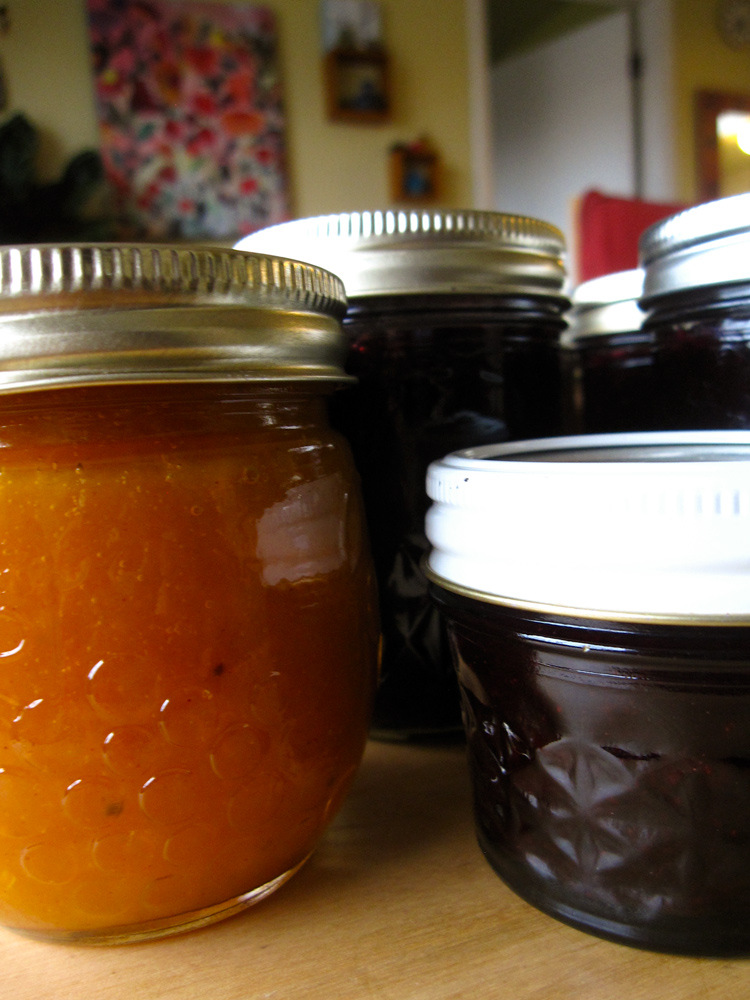
My husband had been asking me to make more jam because we were out for a while. So I decided to tackle that during my sabbatical week!

We buy fresh fruits in bulk during the summer and freeze them. I prefer to make jam when the weather has cooled down because our apartment gets super hot during the summer, and it wouldn’t be fun to do water bath canning then… :p

jam01_lores

I made three kinds of jams this time! Our all time favorite blueberry, apricot, and I made a new addition, spiced apricot with cinnamon and clove. YUM.jam02_lores jam03_lores

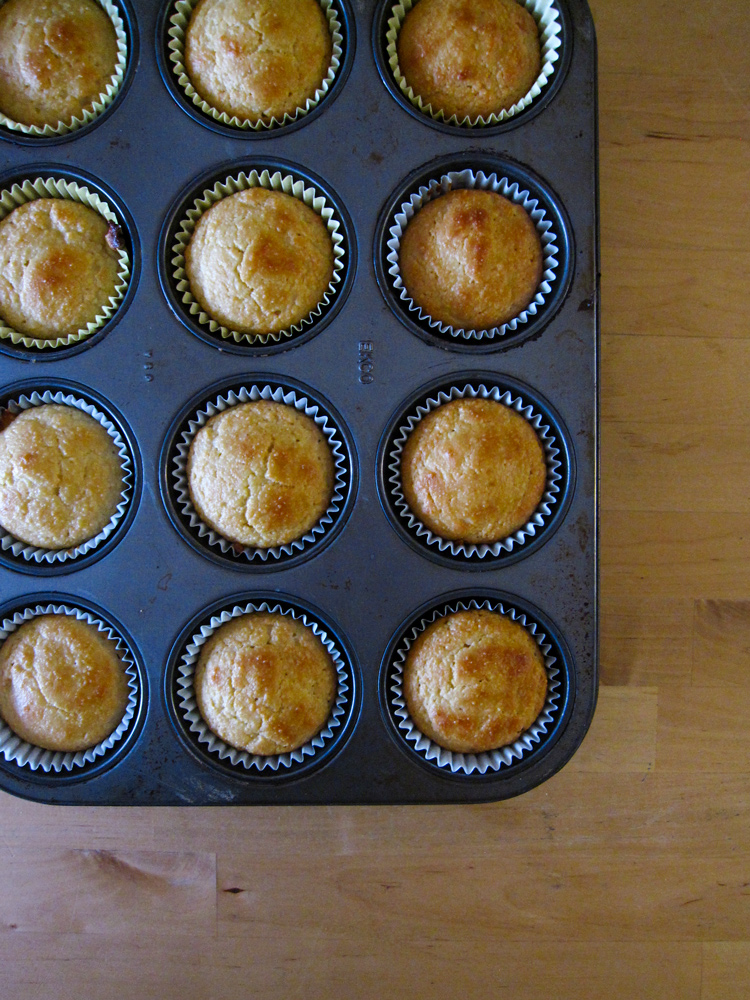
It’s kind of a long story, but I’ve been on an elimination diet of no grain flour for a while. But after making so much yummy jam, I really wanted to have something to eat it with. So I did some research and found this easy almond flour muffin recipe!

almond-muffins01_lores almond-muffins02_lores

It was really quick to make and was delicious! It has a nutty, earthy flavor, and the texture is very similar to cornbread. It went really well with my jam too!almond-muffins03_lores

And I just generally spent more time cooking during the week. I love to eat and am happy when my creations turn out yummy!

3)  I made art for fun.

I still make something every day, but nowadays I spend much less time making art just for fun. During the sabbatical week, I tried to turn off my work mode and doodled my little heart out.

Here are some of the drawings I made!

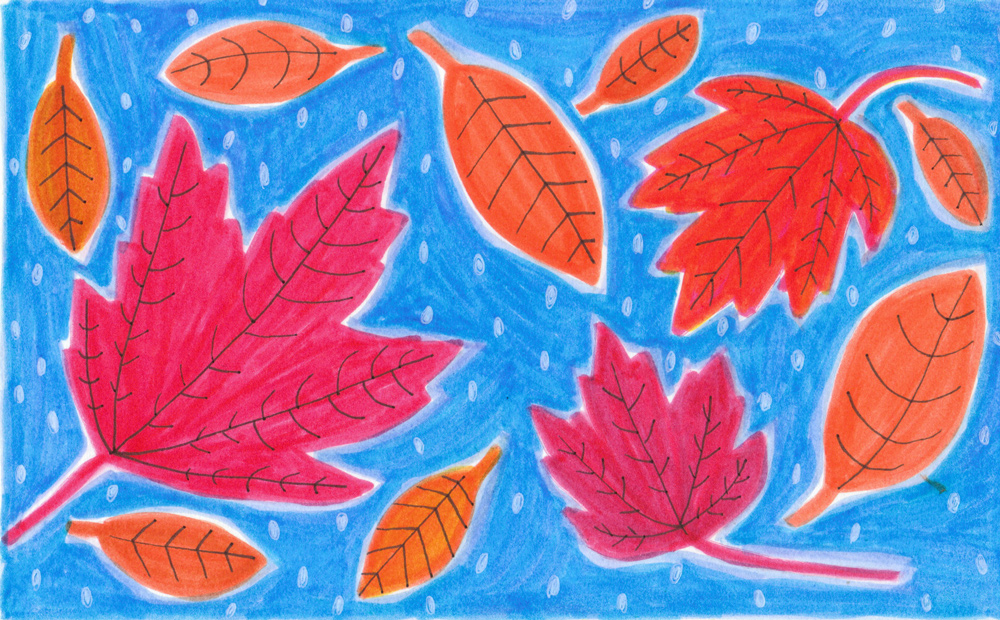
fall-leaves-blue-bg_lores

fig-line-drawing_lores

blue-purple-white-patterns_lores

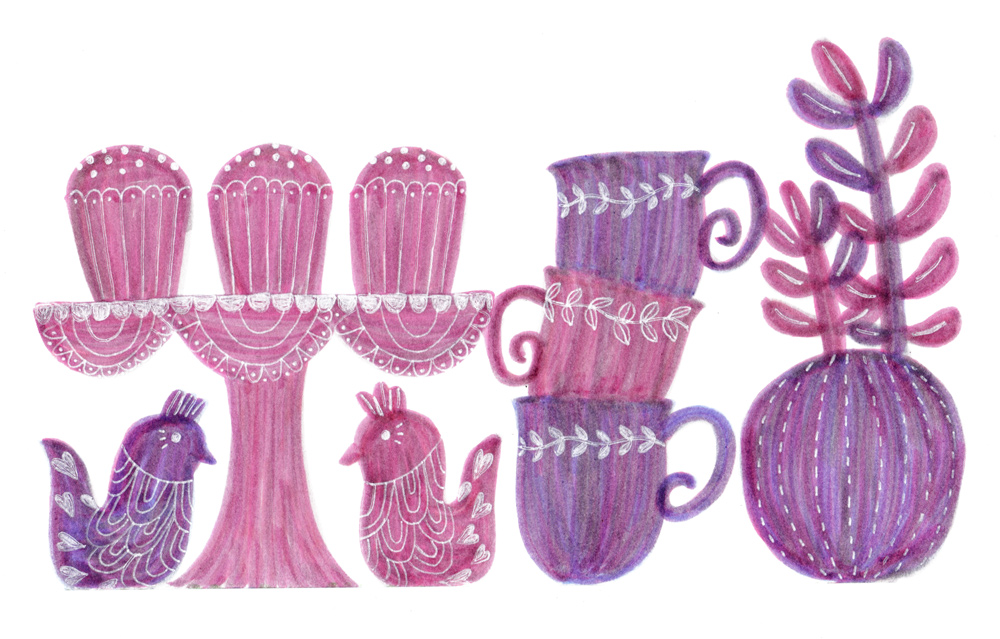
green-blue-bowls_lores green-yellow-cups_lores pink-purple-cupcakes_lores

Aren’t these fun?? As I shared in this blog post, I always get new inspiration and fresh ideas for future work when I’m playing around.

4) More friend/family hang out time

I had a few dates planned with my friends but ended up having just one for one reason or another. It worked out fine because, well, I’m an introvert and I recharge by being alone 🙂 My husband was away for work for a few days too, so it was a good balance between having a nice quiet time alone and hanging out with him when he was home!

5) Veg out!

Don’t worry, I wasn’t being productive and doing things all the time, either. I did sleep in and just veg out too! In one afternoon, Dave and I just watched a whole bunch of Netflix shows on our couch. It was very nice 🙂

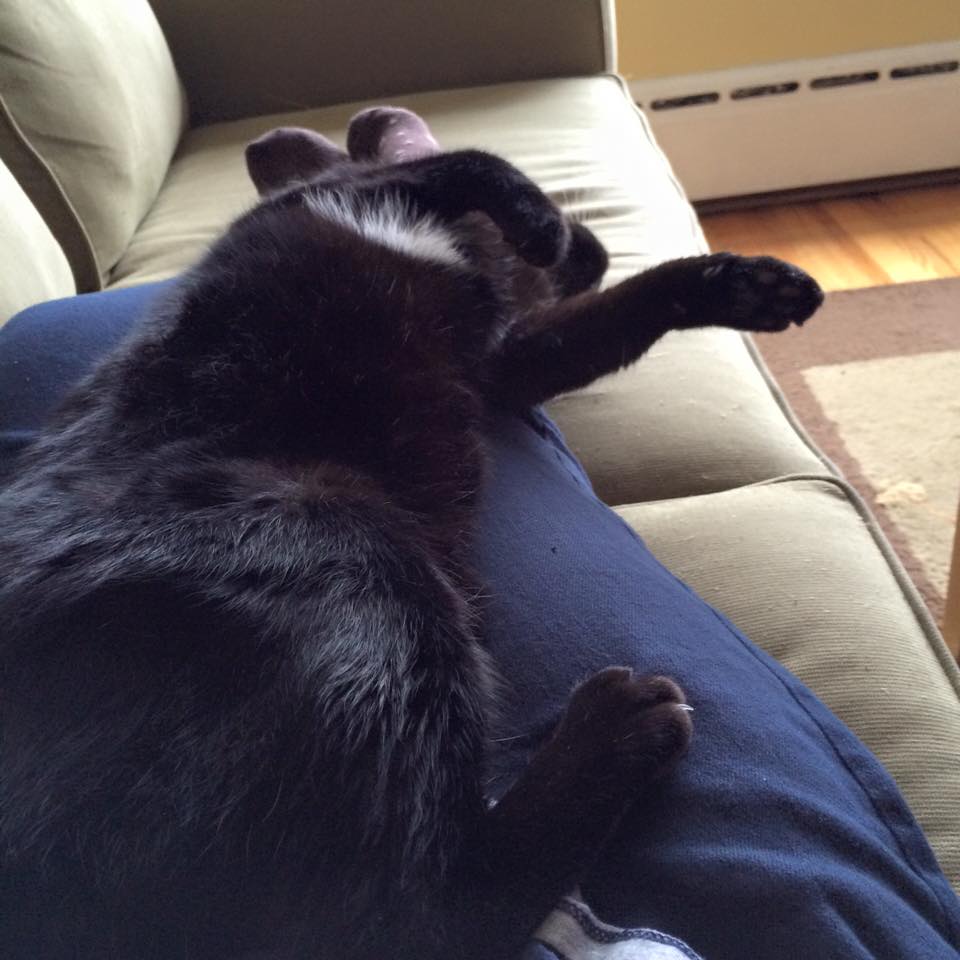
He was helping me be a couch potato!
Our kitty was helping me be a couch potato = his special talent

It took me a couple of days to turn off the work mode, but I really enjoyed the slow week. I totally feel more energized and calm this week. I’m really glad I decided to schedule regular time-off and can’t wait for my next mini sabbatical! I’m gonna need it 🙂

Have a wonderful week!

xoxo Yuko

yuko_flowers

Why I Decided to Take a Mini Sabbatical

sabbatical_loresHey guys!

This is my very first sabbatical blog post.  By the time this post comes out, I’ll have finished my first sabbatical week!  Woo hoo!

I’m following Seanwes‘ advice (I pretty much follow all of his advice) to take every 7th week off to step back from my day-to-day and recharge.  To learn more about the small scale sabbaticals, you can watch his short video or listen to this podcast episode.

If you’ve been following along my weekly blog, you probably know that I quit my day job to pursue art full-time at the end of July this year.  Ever since, I’ve been hustling pretty much non-stop.  I’m grateful for all the opportunities and all that I’m learning every day.

At the same time, I was drained.

It’s weird right?  You’re following your passion and are able to do what you love all the time.  I should be happy and more full of energy, shouldn’t I?

The thing is, it’s still work.  In a way it’s even more taxing than being in a day job because now you’re 100% responsible for whatever happens. I’m mentally more engaged every day, making all the decisions and thinking ahead.  And making a lot of art can be hard on your body, too.

When I was toying with the idea of taking a week off regularly,  I was hesitant at first.  I just started doing this full-time not too long ago, and my business is still at an early stage of growth.  Is it smart to take a week off now?  It’s not like I have paid vacation any more!  I started thinking, well, maybe I can take sabbaticals later when my business is bigger and then I can afford to take a time off.

And then I had to shift my mindset around a few things to really recognize the benefits of taking a regular time-off.

By taking a week off every 7 weeks, I may have a small loss in sales or client work.  But if I put off taking care of myself, I’m going to burn out for sure.  There is absolutely no doubt about that.  And if you’re burnt out, there will be no passion to pursue.  That’s the worst thing that can happen to any creative people, right?

When I worked with people affected by domestic violence in my old day job, we often talked about self-care as an ethical obligation.  Working with people with trauma could cause you to have secondary trauma, which will lead you to burn out.  If you don’t recognize the signs of burn-out and take care of yourself, you’re not going to be able to help people effectively.  Not to mention your own happiness, and your personal relationships will suffer too.

I know that growing a business is hard work that could take many years.  If I put off taking care myself until I could “afford it”, 1) it may never happen because there are always things to do, and there is never a “good” time to take a time off, and  2) my business may never grow to the point where I feel like I can “afford it” because I’ll burn out and quit.  Neither option sounds good, does it?

So I’m making a commitment to take every 7th week off to step back and recharge.  I’m not going to wait to implement a good plan that’s going to help me and my business grow long term.  My future sabbaticals are already on my calendar so I know not to schedule any “work-y” stuff, like client meetings and project deadlines during that week.  I’ll probably stay away from my regular blog-writing though I might continue writing for a different project or for fun.  I’ll prepare a shorter blog post for each sabbatical week, so you won’t miss me 🙂

Some sabbaticals may just be me relaxing for a week.  But here are some of the things I’d like to do during my week-off:

  • Make art for fun and/or exploration
  • Learn new skills and information whether it’s about creativity, business, or something totally different (like cat whispering!)
  • Spend more time with family and friends
  • Focus on my long-term project – e.g. web redesign, new service development, future visioning etc.
  • Enjoy other creative things like crochet and sewing
  • Cook more
  • Pamper myself

I know for sure that the long-term benefits of taking mini sabbaticals far outweigh any short-term losses.  Plus, one week is not that long…  It’s not as big of a deal as taking a year off or something!  If you get behind during the week off, I’m sure you can catch up in the following weeks because your time off will make you even more productive.  Win win!

Oh I can’t wait to report back what I did this past week in my post next Sunday!

See you soon!

xoxo Yuko

yuko_flowers


Draw Yourself Back To Nature Blog Hop Day 3: Fall Leaf Doodle Tutorial!

banner-photo_lores

Hi everyone! Welcome to the special edition of my blog post today!

Those of you who’ve been following me know that I usually post an article about creativity and motivation every Sunday. Even though I’m on a mini sabbatical this week, I get to show up for you twice… How cool is that?

For those of you who just discovered me through Kelly Johnson’s Draw Yourself Back to Nature Blog Hop, it’s so nice to meet you 🙂 Thanks for taking the time to stop by! NOTE: There is an announcement about a cool giveaway at the end of this post, so don’t miss it 🙂

CC-show01_cropped_lores

Before we dive in to today’s nature drawing tutorial, let me take a moment to introduce myself! My name is Yuko Miki, and I’m an illustrator, print-maker, and a blogger in Seattle, Washington. I was born and raised in Himeji, Japan.

HImeji is best known for its beautiful castle! Photo credit by Yoko Miki (a.k.a. my mom)

Himeji is a pretty big city, but I grew up in a rural part of the city surrounded by rice patches and mountains. My grandparents grew rice and many of the vegetables we ate. I used to take it for granted and didn’t really think it was anything special. I even thought farming and growing up in a rural area were kind of uncool!

Beautiful view from Mt. Syosha, Himeji, Japan

I moved to Seattle about 19 years ago to study English and ended up staying here for good. Seattle is a great city, but I was pretty disconnected from nature and growing food for many years. I re-discovered the wonders of nature and re-connected with the soil when I met my husband, Dave, almost 9 years ago. Dave is a permaculture designer/teacher/author and helps people create an ecologically sustainable life. He inspires me and many others to choose a way of living that is kind to people and the earth. Yea I know, he’s pretty cool 🙂

We got married a little over 2 years ago. Boy time flies!

My journey as an artist has taken kind of an unconventional route, too. As a child, I enjoyed drawing but moved on to other interests in my pre-teens and didn’t engage in any visual art for a long time. About 5 years ago, at my day job I was doodling some cartoon during a meeting, and my co-worker really liked it and wanted me to draw more. I started drawing here and there for fun and for friends, and I loved being appreciated for what I can create on paper.

A drawing from when I was little. Not sure how old I was. I love how dynamic kids' drawings are!
A drawing from when I was little. Not sure how old I was. I love how dynamic kids’ drawings are!

I grew to like drawing more and more, but I never thought I could make it as a professional artist. I never went to an art school, and my drawings are pretty wonky. So I enrolled myself in a Graphic Design program at a local college in hopes to become more creatively employable and finished a certificate in 2014.

But in my last portfolio review class, I started freaking out a little bit. My work didn’t really look like other designers’. My design was pretty wonky and focused a lot on my illustrations. Oh no, I thought, I’m a bad designer!!

I nervously finished my final presentation to the class. Then our instructor, Susan, said to me, “You know, you’re not a bad designer. But you obviously are more passionate about illustration. Why don’t you just pursue illustration?” And I knew then and there that’s what I needed to do. I’d been so concerned about how unpractical my dream was and didn’t have a lot of confidence in my work even though people around me saw my potential. It’s so funny how you sometimes feel like you need a permission to follow your dream!

Anyway, then I started a daily drawing project back in April of 2014 where I made a drawing about happiness and shared it on the internet every day for 365 days. It helped me gain some traction, and I developed a daily creative practice helped me grow as an artist.

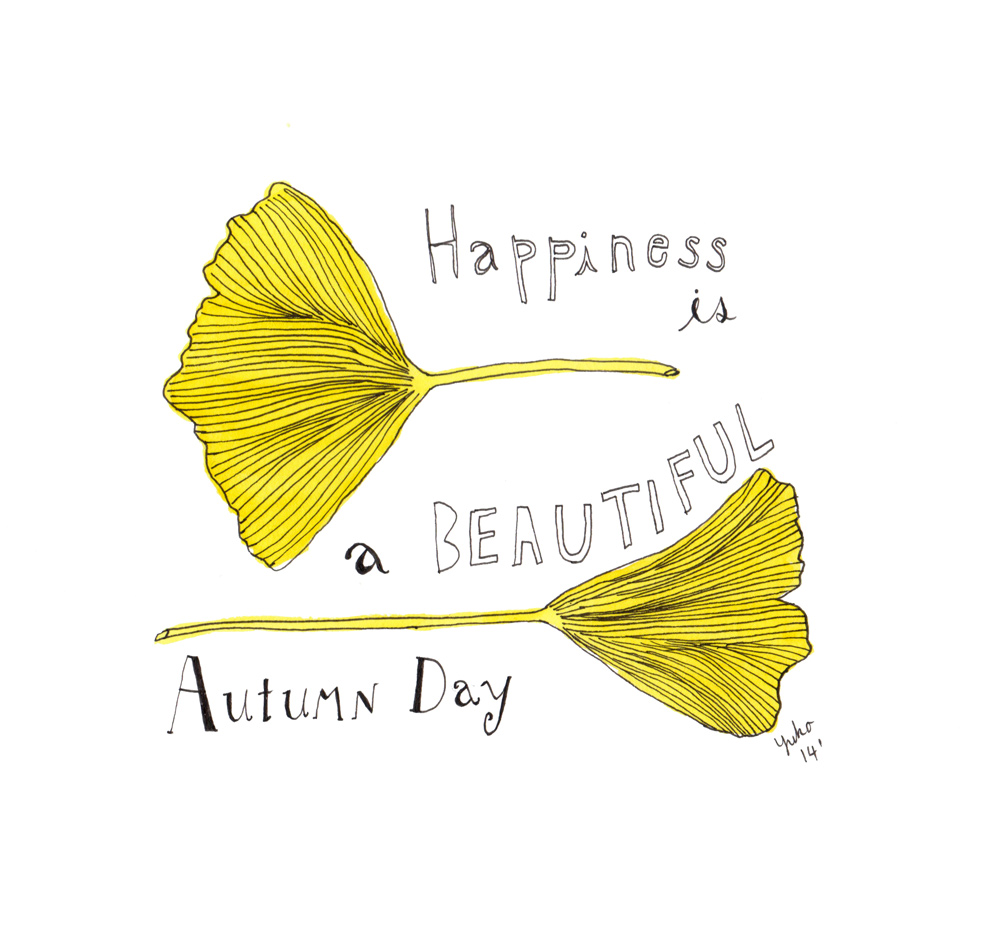
A lot of my daily happiness drawings were inspired by nature.

autumn_lores

seasons_lores

And somehow the universe aligned, and I was able to quit my day job at the end of July 2015! If you’re interested in learning more about how and why I quit my day job, you can read it here!

I-quit_lores

I’ve been enjoying being my own boss and hustling to take my art business to the next level for the past two months. I talk a lot about my journey and share my learning on my blog here, so do follow if that’s something you’re interested in 🙂

OK I think you got a good sense of who I am and what I’m about… Now, back to our topic for today!

I was stoked when Kelly Johnson from the Wings, Worms, and Wonder approached me to join her Draw Yourself Back to Nature Blog Hop! She’s asked the participating artists to provide a nature drawing tutorial, and I was so excited to join because I’ve been wanting to create tutorials for a while and hadn’t done one yet.

My tutorial is loosely related to Kelly’s nature journaling tutorial prompt No. 1 from her ECourse (which by the way is packed full of awesome resources and tutorials, easily worth more than what you pay!) where she teaches you how to draw nature by breaking them down to simple shapes.

I like using simple shapes and lines, and most of my work is pretty flat as opposed to photorealistic.

So here is my brand new Fall Leaf Doodle Tutorial I created for you! Follow along the steps and create your own nature-themed doodles. Have fun!

1) Materials you need for this tutorial: sketchbook, coloring markers & drawing pens.

I used Bee Paper Super Deluxe sketchbook, Sakura Koi Coloring Brush Pens, and Pigma Micron Pens (size 01 and 08 in black are my favorite!) in this tutorial. Of course this is not a requirement to use these specific brands/products, and you can use what you already have and are comfortable with.
materials_lores
I enjoy drawing with different mediums (watercolor, gouache, colored pencils, etc), and I like the portability of the markers when you’re on the go. Since you can layer and draw without worrying about the colors bleeding into each other, you have more control over the piece as well.

For this tutorial, I used Pale Orange, Yellow, Vermilion, Coral Red, Woody Brown, Orange, Fresh Green, Light Sky Blue, Light Warm Gray, and Ice Green Koi Coloring Brush Pens.

2) Gather your inspiration and references!

For this tutorial, I’m drawing fall leaves that spread and fill one page of your sketchbook. Since I typically draw things in simple and stylized manner, I like to look at several different images to get the feel for what I’m going to draw. Like Kelly mentions in her tutorials, you can do a goodle image search and/or go out and pick up leaves from outside!

Screen Shot 2015-10-05 at 12.47.15 PM
A quick google images search for “fall leaves” returns lots and lots of pretty images.
And I found these pretties on a quick walk around my neighborhood.

3) Pick a couple of leaves from your references and practice drawing them with a marker.

Like Kelly mentions, we’re not trying to be scientific botanical illustrators here. As a commercial illustrator, it’s more important to me that my drawings have my voice (a.k.a. my style) than how accurate or real they look. My style is simple and whimsical, and it makes my art fairly accessible to people.

You might be wondering, “I don’t know what my style is. How do I find it??” Well, unfortunately, there is no shortcut for finding your style. But you can find it by 1) paying attention to what you’re attracted to aesthetically, and 2) practicing a lot.

Whether you’re attracted to more realistic art or stylized illustrations, only way to get better and deepen your style is to practice.

So turn to your sketchbook or any scratch paper, and start making simple drawings of the leaves you chose with special focus on their shapes. Don’t worry about any mistakes or details. Draw it big. Draw it small. Maybe exaggerate certain aspects and see what you think. If it’s wonky, that’s OK. Nobody is going to see this, so just relax and have fun 🙂 Think of it as your visual brainstorming session! There is no need for judgement or order. Don’t be precious with this. Just go for it.

If you’re intimidated by more complex shapes (like the maple leaf), start with the basic oval-almond shaped ones!

Some examples of how your marker sketches can look like.
Some examples of how your marker sketches can look like. Very simple.

4) Experiment with layering different colors.

One of the things I like about drawing with markers is that I can layer the colors in a very controlled way. Sometimes you have a good idea of what it looks like with multiple colors layered, but other times it can be a total surprise. Occasionally, you mix two colors (e.g. any complement color combo) that you thought were interesting and get a muddy mess. So just test them out on your sketchbook or a scratch paper.

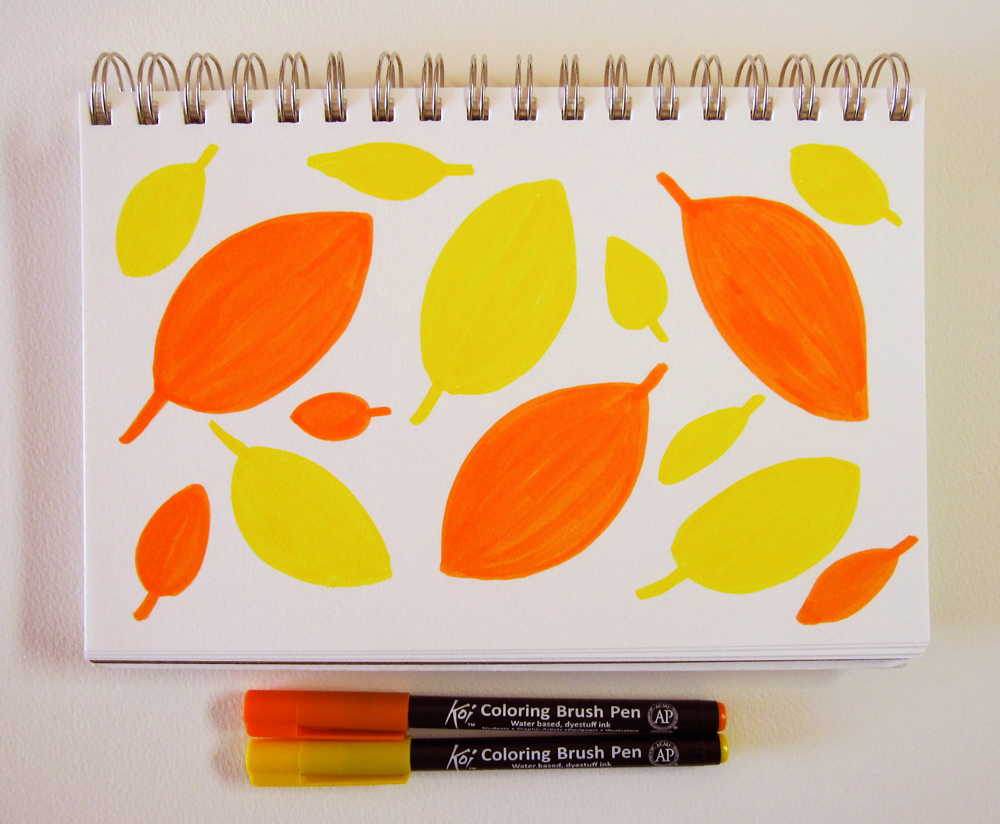
Example of layering colors. I used Yellow to draw the first leaf and layered Orange in half and Woody Brown on the other half.
Example of layering colors. I used 1) Yellow to draw the first leaf and 2) layered Orange on the left half and Woody Brown on the right half. You can achieve more subtle hues by layering colors.
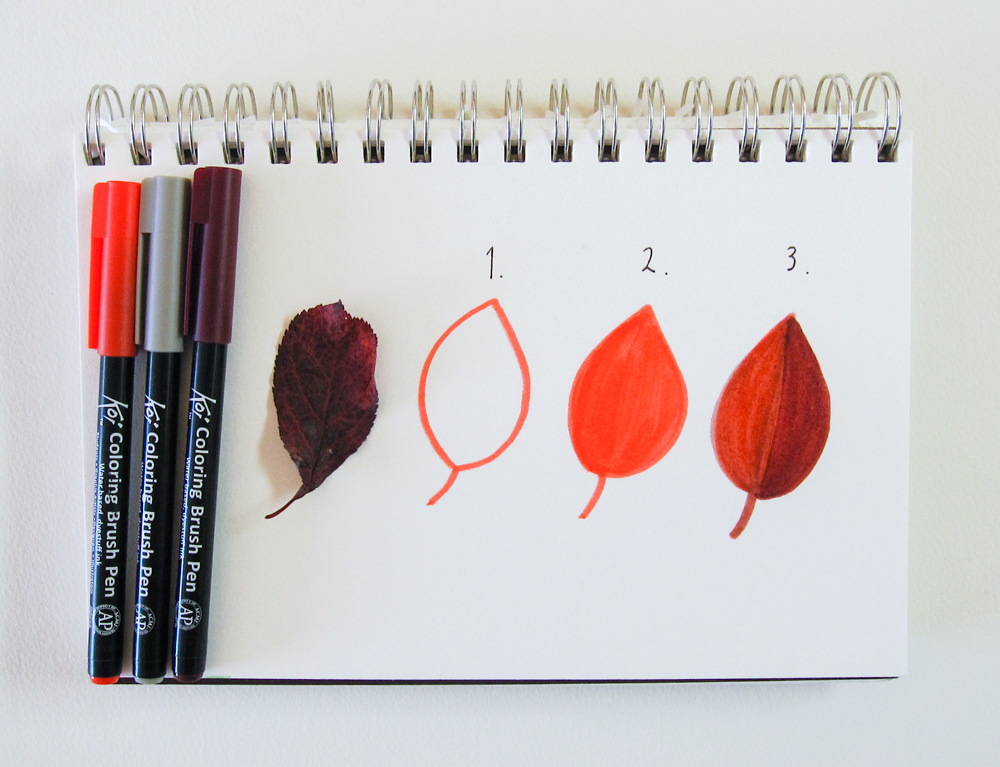
Similarly, in this example I show the 1) outline 2) filled with Vermilion and 3) layered with half Light Warm Gray and half Burgundy. Layering with gray colors is a great way to darken a bright color.
Similarly, in this example I show the 1) outline 2) filled with Vermilion as a base color and 3) layered with half Light Warm Gray (L) and half Burgundy (R). Layering with gray is a great way to tone down a bright color.

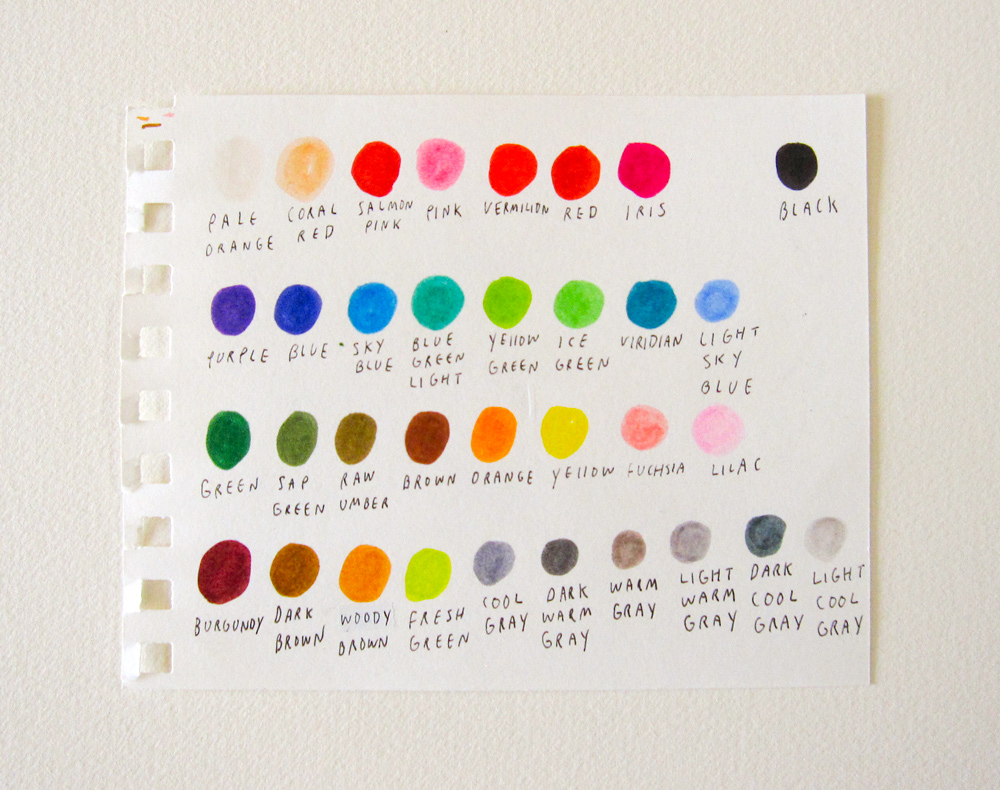
On a side note, I like having a color chart of the makers I have so I don’t have to test it every time.

color-chart_lores
You can simply draw small shapes with each color, put their name below the swatch and keep it somewhere handy!

5) Once you practiced drawing some shapes and layering colors, let’s fill your sketchbook page with them, shall we?

01_orange-shapes_lores

STEP 1: Chose one base color. I prefer to start with a lighter color to make it easier to layer on later (I’m using Orange marker here). To make this tutorial simple, I’m going to use one basic leaf shape for this piece. Draw a few larger leaves with your base color. Don’t place them so tightly together as you’ll be filling the white space in the following steps.

I like to just go for it without drawing with pencils first, but if you’re nervous or have a specific pattern in mind, feel free to draw the shapes with the pencil first and fill it in with the marker.

02_orange-and-yellow-shapes_lores

STEP 2: Chose another base color (in this case, Yellow) and draw a few more leaves in the white space. Again, leave some space in between.

03_smaller-shapes_lores

STEP 3: Using the same base colors, add in smaller leaves in the white space. Vary the directions, sizes, and shapes slightly to fit in the space. Leave some white space between the leaves.

04_layer01_lores

STEP 4: OK, now it’s time to layer some colors on top of the base colors! I added Woody Brown color to some leaves. It’s a nice subtle fall color. Koi Brush Pens work sort of like watercolor so the base color still comes through the layers. For some leaves, I covered the entire shape, and for others I just layered on half of the leaf.

05_layer02_lores

STEP 5: Then I added Vermilion on top of some of the leaves. This color really pops!

06_layer03_lores

STEP 6: Then I went over the leaves with either Yellow, Pale Orange, or Coral Red. I typically layer 3 times (base + two layers) either with 3 different colors or same color multiple times to get the hue and depth I want.

07_colorwheel_lores

STEP 7: Once you’re happy with the leaves, let’s decide on the background color! I wanted the warm fall colors to pop, so I decided to go with the blue-green hues (their complementary color scheme.)  You can learn more about color theory here.

08_background-colors_lores

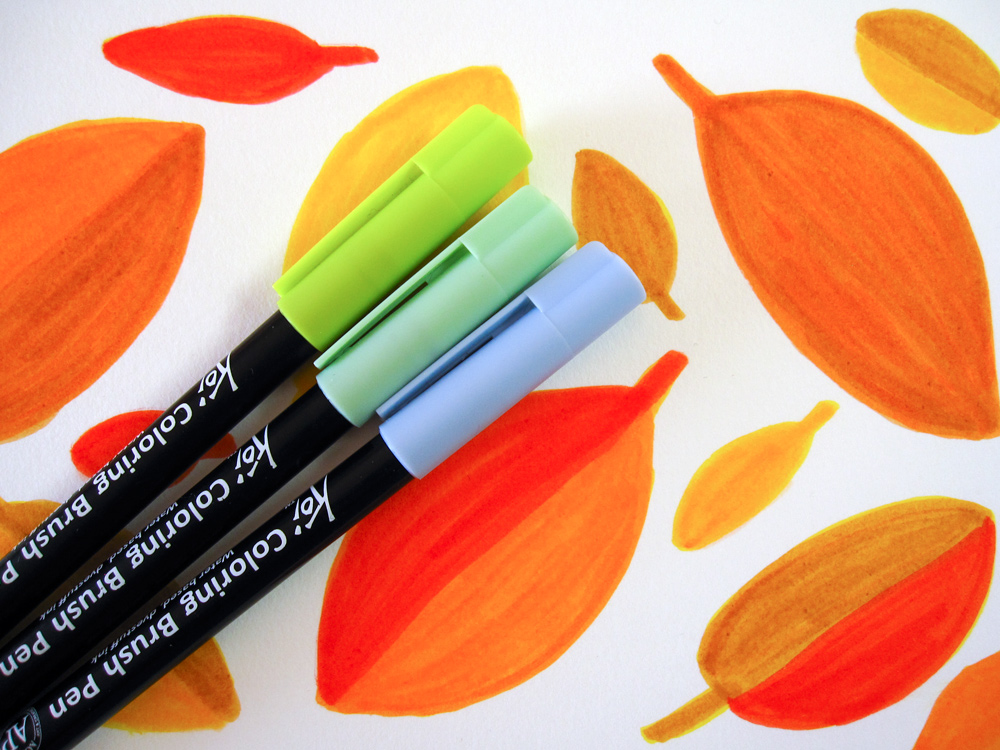
I picked Fresh Green, Ice Green, and Light Sky Blue for my background.

09_background-color_lores

STEP 8: Fill in the background! I like to draw lines around the leaf shapes as I go so I don’t accidentally draw over the leaves. When I’m filling the larger space I can go faster in bigger strokes, and the lines around the leaves signal me to slow down. I like to leave a small white space between the leaves and the first background layer. I’ll tell you why in a minute.

10_background-color02_lores

11_background-colorCU01_lores

12_first-background_lores

First background layer is done! You can see the strokes pretty well. I like the look but if you prefer not to have stroke lines be so visible, you would need to pay more attention to the directions and length of your strokes.

13_first-backgroundCU_lores 14_second-backgroundCU01_lores

STEP 9: Let’s add another layer to the background! I’m using Light Sky Blue here.

14b_second-backgroundCU_loresSo this is why I like to leave a small gap between the leaves and the background. As you add second and third background layers, you can come in a bit closer to the leaves than the first layer did to create a boarder with only two or one color layered.

This creates lighter colored boarder around the leaves, which helps the leaf shapes pop. You don’t need to be precise about this process. Play around with it to find what you like.

15_second-background_lores

After two background layers.

16_third-background_lores

STEP 10: Add the final layer. I used Fresh Green marker here. You can probably see that I layered it on pretty loosely. Again, if you prefer a more uniform or flat look, you just need to be more mindful of your strokes.

17_third-backgroundCU_lores

Close-up. At this stage, the background colors go up to the edge of the leaves to fill the white boarder around them. I still leave some white spot peeking through.

18_linesCU_lores

STEP 11: This is the final step! Add the veins with your drawing pen! I used the Micron size 01 in black.

You could try a few different styles of veins, like straight lines going all the way to the edge of the leaf, shorter ones, curved veins, tightly spaced vs. widely spaced etc.

I like to add the pen lines at the end because it sometimes runs if you go over it with the markers. And the black lines are sharper/crisper when you add them at the end.

Voilà!! And you’re done!!

I love this method of doodling because it’s really accessible and fun. My favorite time to doodle with markers is after dinner when my husband and I sit down to watch our favorite Netflix shows 🙂 Because I’m drawing simple shapes and not worrying about details so much, it’s a perfect activity to relax and unwind with.

You can also play with combining different shapes like this one below:

fall-color-leaves_lores

Or add interesting patterns to the leaves like this one:

green-yellow-leaves_lores

And this one is created entirely with markers:

pink-poppies_scan_lores

Possibilities are endless!

I hope you enjoyed my tutorial! This was my first time putting together a tutorial, and I had a lot of fun and learned from it too.

OK, before you go off to create your own doodle masterpiece, I have a few quick announcements!

1) Tomorrow’s blog hopper is Carolyn Lucento of Magical Movement Company! Be sure to check out her blog here for another tutorial and a sweet giveaway!

2) Kelly Johnson’s hosting a live hour where she’s doing a simple journal making tutorial and having a Q&A on Friday the 9th at 1 pm EST. More info here.

3) And last but not least, I’m giving away the original drawing I made for this tutorial to one lucky winner!! To enter, simply comment on this blog post before the end of this Sunday 10/11 at midnight EST. I’ll pick one winner, and the winner will be announced on Tuesday 10/13 on Wings, Worms, and Wonder’s blog!

20_finished-illo_lores
Fall Leaves, 5.5″ x 9″, markers, pen & ink on archival paper.

Thank you again for hanging out with me!! If you’re new to my work, let’s connect on Facebook, Instagram, or Twitter, and be sure to sign up for my monthly newsletter.

Have a wonderful week connecting with nature and creativity 🙂 Talk to you soon!

xoxo Yuko

yuko_flowers


Work Hard and Play Often

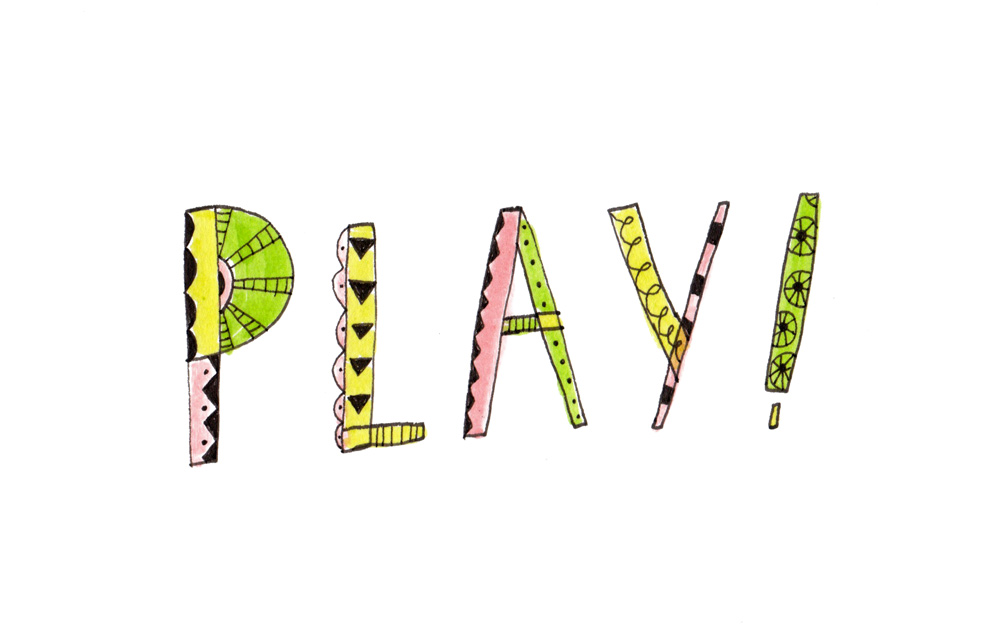
play_lores

Hello friend,

It’s October!  WOW!  I feel like I’m saying this every month…but where has the time gone??

At the time I’m writing this post, it’s still September.  September turned out to be a really busy month.  I’m grateful for all the opportunities I’ve gotten, and I definitely over-committed.  Plus we had a loss in our family and had to take off several days to attend an out-of-state funeral on top of it.

So I’ve been working a lot to stay on schedule with my commitments and due dates and not doing a very good job of taking a break.  I don’t like it, but I signed up for this.  Sigh.

I’m still planning on taking a week off to step back from my day-to-day and recharge (a.k.a. small scale sabbatical) starting Monday, October 5th!!

I’m still preparing a blog post for you next week, so don’t worry 🙂  It’ll probably be a shorter “sabbatical” post but still be a good one.  I’ll also report back what I’ve done in the sabbatical week in my future blog.  Stay tuned 🙂

I’ve been talking a lot about why you want to work hard every day to achieve your goal. Today I want to share how “play time” is also very important for artists.

When I say play, I’m not talking about go-carting or laying on a beach in Hawaii.  Yes, those things are important, too, but I’m specifically talking about creative play time.  It can be doodling or any self-directed creative projects.

I’m gonna talk about doodling here because most of my self-directed projects start with doodling.

Doodling is great.  It’s free-flowing.  It’s loose.  You can experiment all you want, and nothing is a mistake.  Nobody is telling you how to draw or what it should look like.  It’s fun and engaging.  Because doodles often represent the core of what you like and do well, they are great tools to discover and deepen your voice too.

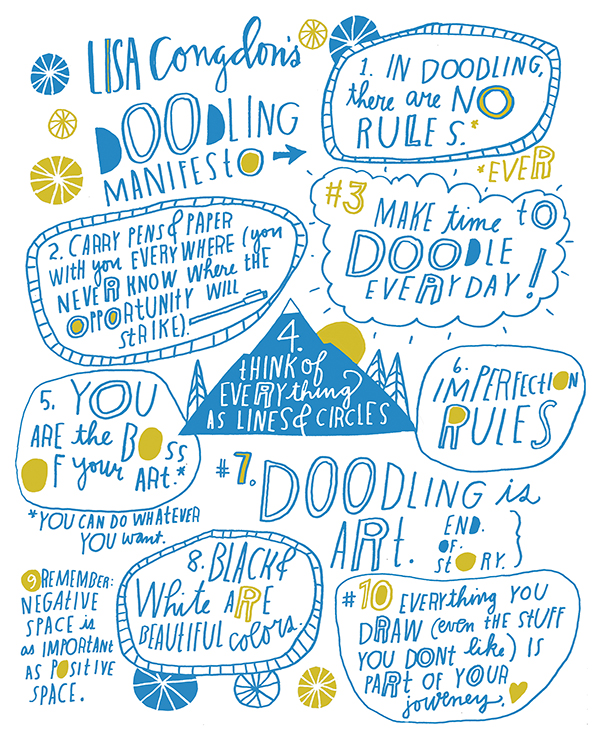
I love Lisa Congdon's doodling manifesto so much <3
I love Lisa Congdon’s doodling manifesto so much ❤  Doodling rules!

In doodling, you might find a medium you like or discover a composition you haven’t thought about.  Because there is no mistake in doodling (YES!), you can try all sorts of color combinations and styles, too.  I sometimes start doodling and don’t like what I draw.  But then I look at it later and re-work it and end up liking the results.

By doodling every day, you exercise your creative muscles every day.  You’re building a creative muscle memory of how to get into your relaxed yet focused mode.  And that is the optimal state you want to be in to do your best work.  It’s kind of like meditation.  The more you practice being present, the easier it gets to access that part of you.

Because my doodles often represent what makes my work unique and special, I find inspiration for most of my future work from my doodles.

Here are some of my doodles that turned into actual work/products:

1) Watercolor abstract paintings

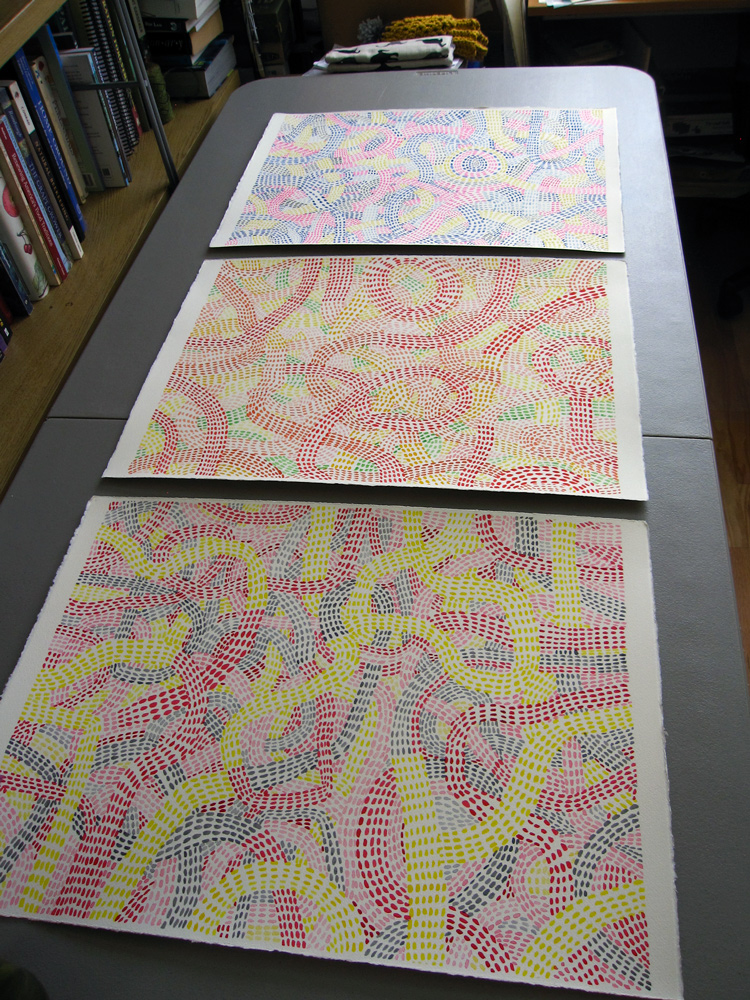
When my husband is not traveling for work, we usually watch a couple of shows on Netflix during and after dinner.  I usually doodle while we’re watching (or listening, more accurately) something in the evening.  I like doodling sort of abstract motifs while watching something because it doesn’t require the precision and care that more representational drawings might require.  If it’s wonky, it’s OK.

Anyway, I doodled a series of small watercolor abstract paintings over a course of several days.  Just loose, fun, and flowy experiments.

But I really liked how they turned out, so I turned them into postcards!  I used Moo Printfinity service so I could print multiple designs without committing to printing a larger number of each.  I’m very happy with the quality of their postcards!

6-postcards_lores

I made the postcards for my monthly art subscription customers for September.  And I showed it to the manager of my neighborhood art gallery, and now they carry them in their gift shop among other goodies I made.  These are also available for purchase here.

paintings-1-to-3_lores

I also showed them to the owner of Geraldine’s Counter, one of the best diners in Seattle :), and he’s agreed to show my work there during the month of October.

I managed to finish 8 pieces to show.  And here is me and a few of my artwork!

geraldine's_lores

I can also turn these new paintings into postcards, prints, phone cases etc. not to mention selling the originals.  Possible multiple income streams from artwork that came out of fun doodle projects!

2) Sumi drawings

I like drawing with sumi ink and brush.  Like so many other Japanese kids who grew up in Japan, I took Japanese calligraphy lessons every week.  Having a nice handwriting is highly valued over there.  We’d sit up straight on a little cushion on the floor and practice writing on a rice paper with a brush dipped in sumi ink.

It’s such a zen experience for a kid!  Writing with ink and a brush really forces you to concentrate.  And the sumi ink smells really good…

I took an art class a couple of years ago, and in one of the classes, we drew with sumi ink and brush.  That was so much fun!  I thought sumi ink was for serious writing only.  But no, you can also be free and fun.

yellow flower
Sumi ink & oil pastel drawing I made in a drawing class (2013)

Anyway, I started incorporating sumi ink in doodles and casual sketches too.  I just love how rich the black is.  And the smell reminds me of the quietness in calligraphy lessons and my childhood in Japan.

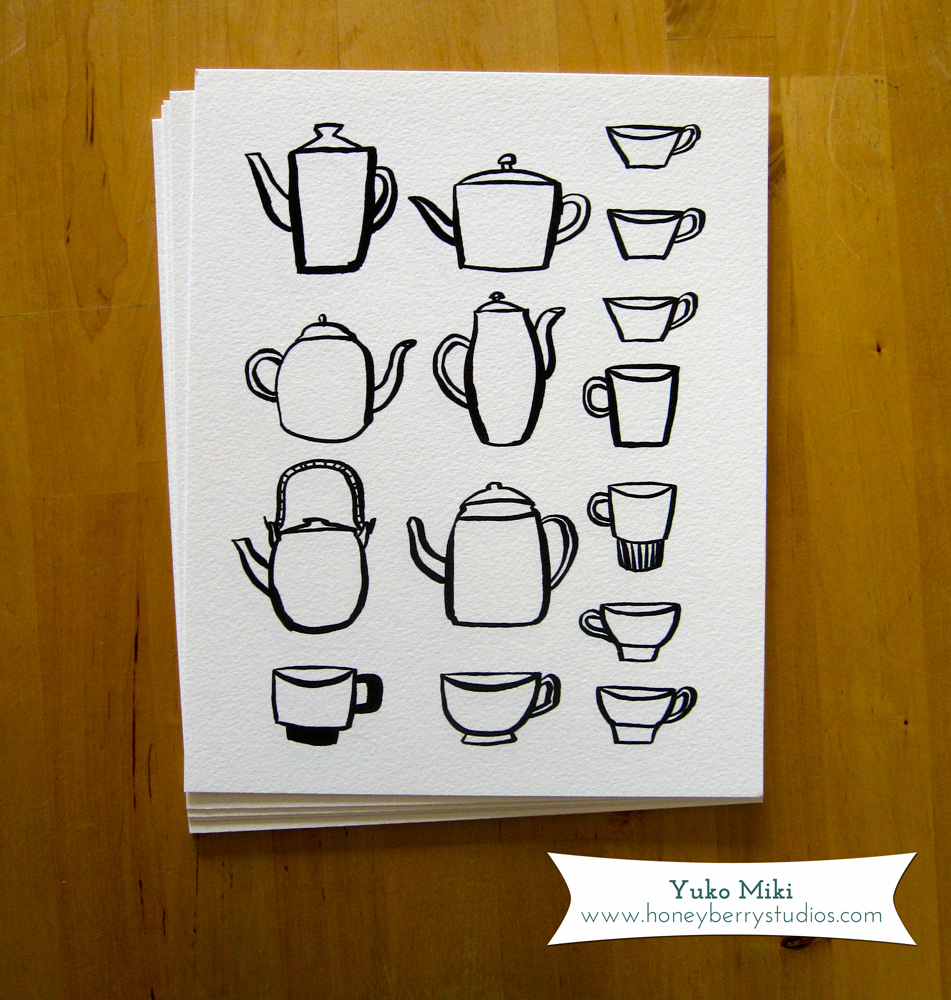
One day I was doodling teacups and teapots in sumi ink.  I just like drawing everyday things and wanted to see how they’d look as ink drawings.  Well, I loved how they turned out so much that I sent them to the print shop right away!

Coffee-pots04_lores

framed_coffee_pots_lores

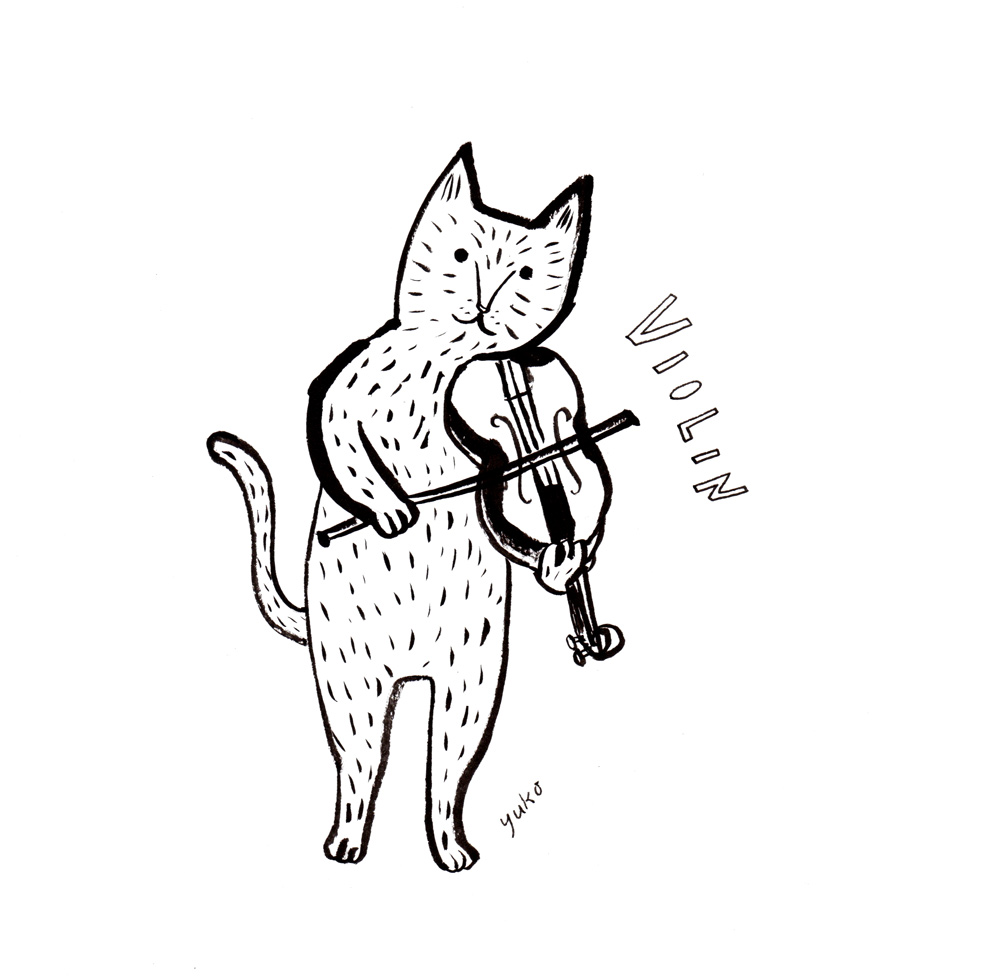
Some of you know that I participated in the August sketch challenge with Janine Crum #makewithme – I’d receive a prompt for a drawing every morning and would share it with the community.  On day 5, I had this brilliant idea of starting a sketch in sumi ink for the rest of August.

grasshopper_lores

mushrooms_lores

violin_lores

As I was looking at my growing sumi drawing collection, I thought, why not turn them into a calendar!?  I’ve been wanting to do a calendar for a while, so it was perfect!  I’ve created several new drawings to add to it, and my 2016 calendar is available on my Etsy shop!

calendar-pages-multiple02_lores

all-pages_lores

3) My botanical doodles  

Flowers and plants are my most favorite subjects to draw.  They’re so perfect and break my heart a little bit.  They’re my go-to motifs when I don’t want to think too much about what to doodle.

Here are some of my recent botanical doodles:

blue-yellow-green-flowers-_lores

grey-blue-purple-flowers_lores

yello-pink-vermilion-flowers_lores

They’re so much fun to make, and can’t you just imagine them as fabric or wrapping paper designs?  That’s totally on my list to do 🙂

See how creative play time isn’t just for play?  When you work as an artist, there is no clear boundary between work and play.  When you create art for yourself or just for fun, it’s still helping your art practice and professional growth, too.

I have just a few practical tips on doodling:

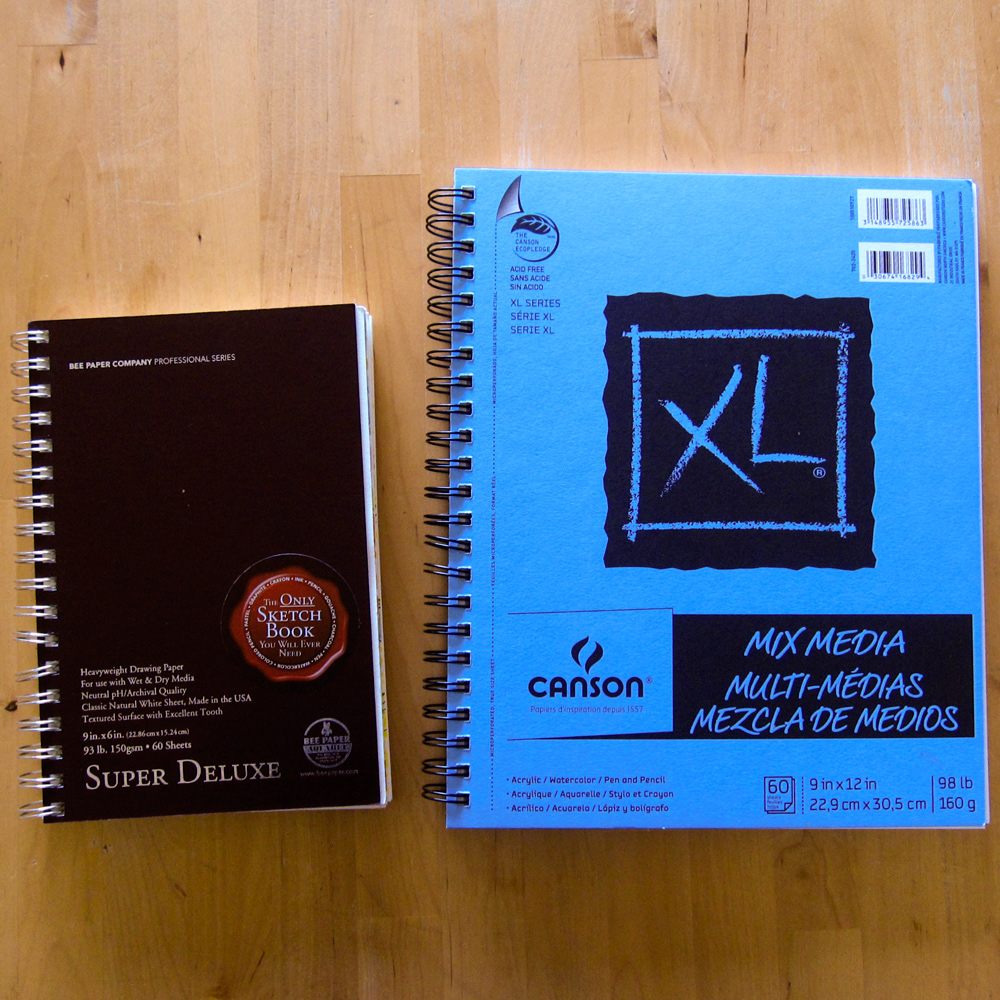
1) I use sketchbooks that are good quality but not very expensive.

My favorite is Bee Paper Company Super Deluxe Sketchbook (6×9), and Canson Mix Media Sketchbook (9×12) for everyday drawing.

sketchbooks

I know if I use more expensive sketchbooks, my doodling experience will be more precious, and I really want to keep it as casual and accessible as possible.  Also, smaller sized sketchbook is good for carrying around when you’re out and about.  You fill up the page pretty quickly, too, so that’s satisfying when you don’t have a lot of time.

2) I have drawing materials that are portable and easy to use.

If you’re not a daily painter, just a thought of setting up to paint may deter you from having a daily doodle practice.

Except for sumi drawing and my serious watercolor painting, I use pens and markers a lot.  My favorite is Micron pens for line drawings and lettering, and Koi brush pens and Gellyroll pens for coloring (They’re from Sakura of America).  I also have a stackable watercolor discs (don’t know who makes them but you can get it at many art stores) and water brush pen from Pentel and love them!

colors_lores
I conveniently have the photo of everything I’m talking about!

They’re handy for carrying along with my small sketchbook, too, when I’m out and about.

3) Doodle every day.

You knew this was coming, right?  Doodling is art practice!  Incorporate it in your daily life.  My favorite time to doodle is when my husband and I watch shows on Netflix after dinner.  I also find pocket of time, like while I’m waiting for a friend at a coffee shop, to doodle.   Many artist have a daily practice when they get up in the morning, like August Wren, who does beautiful 30 minute painting every day!

If you need extra inspiration for creating time for a daily practice, read my previous post on this very topic!

Do you feel inspired to doodle more now?  If you take away one thing from this post, it would be “relax and have fun.”  OK, technically that’s two things, but you know what I mean 🙂

Just put the pen to the paper and see what happens.  Draw lines and shapes!  Layer a bunch of different colors!  Some people experiment drawing with their non-dominant hand.  Don’t have a sketchbook?  Just draw on a scratch paper.  Or add something new to your old drawings!  Possibilities are truly endless.

And I have a special blog post coming this week that may help you get started! I’m participating in a Draw Yourself Back to Nature Blog Hop this coming week with Kelly from Wings, Worms, and Wonder! What that means is, from Monday 10/5 through Friday 10/10 Kelly and other artists will create a special blog post and give nature drawing tutorials.

hop 2 day 3 graphic

I’ve always wanted to do tutorials and was very excited when Kelly approached me to join this collaboration. So even if I’m on sabbatical this coming week, you get one bonus blog post from me on Wednesday 10/7 🙂 I’m also doing a sweet giveaway for folks signing up for my newsletter in the post, so don’t miss this opportunity! (If you’re already signed up for my newsletter, you can still enter :))

See you guys next week!

xoxo Yuko

yuko_flowers


If it’s not written down, it didn’t happen.

document-it_loresHello!

I hope you had a nice week!

The title of today’s blog post is “If it’s not written down, it didn’t happen.”  Have you heard of this saying before?  I learned it when I was starting out my career in HR at my old day job.  Basically, if supervisors aren’t diligently documenting employees’ performance issues, you have no leg to stand on if they get fired for bad performance and sue you or file for an unemployment.  You can say “Well, we fired Yuko because she was doing a terrible job!” but if you can’t tell the judge or the employee any specifics, it’s not very helpful.

But today, I’m not talking about HR best practices.  I’m talking about the importance of documenting the steps you took to accomplish your goals.

Have you ever had moments where someone asks you, “So what did you do today?” and you go, “Uh, I was really busy.  I did stuff… but can’t remember what I did??”  Trust me, I’ve been there.  Especially at my day job because I was wearing multiple hats and was constantly multi-tasking (you know how fond of multi-tasking I am… NOT).  By the end of the week I was like, where have I been?  What did I really do?  I was busy.  I was doing stuff.  But what did I actually accomplish??

My husband, Dave, has been keeping a journal for a few years.  It’s not the “Dear Diary” type of journaling, which I have done, but more like bullet points, here is what I did today.  He started doing that because he’s been self-employed for many years and was having the same problem of remembering what he did each day.  In his journal, he writes down things for work and non-work stuff, like “I planted potatoes today.” although as permaculture teacher and designer, planting potatoes is sort of related to his work 🙂

Earlier this year at my day job, I started a career development program for employees and encouraged folks to start writing down what they’ve done each day to achieve their career goals.  It’s a great way to keep track of your progress and also to show their supervisors what they’re accomplishing in their day-to-day.  And I encouraged the supervisors to do the same and write down what their employees are doing well and where they’re struggling.

It helps the employees see what they’ve been doing to reach their career goals and have the documentation to look back on when we meet for our goals check-ins.  It provides supervisors cohesive overview of how their employees have been doing over time and helps identify their strengths and challenges.  Not to mention a good back-up documentation if they ever have to let someone go because of a poor performance (Yikes!) or promote someone for exemplary performance (Yay!).

Of course, this tool is very practical and useful for anyone who is pursuing their goals!

So, let me tell you how I use the documentation to stay motivated and focused on my goals.

Back in March of this year, I started meeting with an accountability partner once a month.  Accountability partner is someone you meet regularly to check in about goals and challenges.  They listen, offer support and problem-solve with you if necessary, and you do the same for them.  I’m fortunate to have two of them, which I’ll write more about in my future blog post.

Anyway, in our meetings, we each set a few concrete goals to work on before the next meeting.  And in the following meeting, we share how we did with our goals and set our next goals.

Because I wanted to be able to reflect back on my experience as accurately as possible, I started writing down what I did around my goals every day in a little notebook.  It’s nothing elaborate – I just write down dates and tasks I accomplished that day.  Before our next meeting, I would review what I’ve done and report back the summary of my accomplishments and challenges.  It makes our meetings a lot more efficient, and I don’t have to waste my precious brain space to hold all the details.

People use different tools, including apps, to journal, but since I work on my computer all the time, I like using the physical notebook for taking notes and jotting down ideas.

my-notebooks_lores
My notebooks! I use the little Ecojot notebook on the left (www.ecojot.com) for my daily documentation and my Lisa Congdon notebook on the right (www.lisacongdon.com) for ideas and future planning.

I like to write them down as I go instead of waiting till the end of the day to do it.  For instance, I got up this morning and finished a blog post, uploaded the title illustration, and scheduled the post on social media.  So that’s what I wrote in my notebook.  I like logging things as I go because chances are, I’ll forget to write them down or forget what I did!  I’ve seen it happen many times to Dave because he sometimes batches his entries every few days and asks me if I remembered what he’s been doing!

I suppose calendars could work fine for this purpose, too, but I don’t track everything on my calendar.  Like for this morning, I would just put “blog” on my calendar but not all the details.  Calendar, however, is helpful for tracking time.  It’s interesting to see how much time a particular project takes.  I’m not super conscious about it usually because I normally don’t finish things in one sitting.

For example, when I’m writing a blog post, I start with a rough draft where I just let it come out of my head and start typing without worrying about grammar or structure.  Then I’ll step away and work on something else for a while.  I might come back to the post the next day and start editing. Usually I complete one blog post over 3 to 4 days.  When I added up the hours, I learned it takes about 8 hours from start to finish, including creating the title illustration and scheduling posts on social media.  I work very similarly when I’m creating an art piece, too.  It helps to clear my head from one thing and be able to look at it with fresh eyes later.

Going back to keeping a daily documentation, It’s been 6 months since I started it, and my notebook is almost full!  It’s very satisfying, and I’m also looking forward to starting on a new *cute* notebook 🙂  Ah, the small pleasures of life…

I use the same notebook for my accountability meetings and my daily log, so notes about my goals and challenges are all in one place.  These notes are nice to review not only to remember what you’ve been doing but also to see how far you’ve come.

Like I said before, I try not to compare myself to other people.  It’s one thing to learn from other people, but once it turns into jealousy or competitiveness, it’s no longer helping you achieve your goal.  Instead, compare yourself now to yourself 3 months ago.  6 months ago.  3 years ago.  When you look at your work from 3 years ago and compare it to what you do now, you should be able to see how you’ve improved.  With your daily documentation, you can now tell what you’ve done to get here.

It’s interesting to look back on my notes now, though, because many of the goals I set and struggles I was having don’t seem nearly as challenging as they did then.  For example, uploading all the portfolio pieces to a new licensing website seemed so daunting back in April.  But since it’s been done for several months, I don’t even think about it.  So when I have similar challenges now, I know that the actual hardest part is getting started.  It doesn’t feel as scary because I’ve done it before, and it wasn’t as hard as I thought.

As I write this, I’m realizing I need to start documenting “how” I do things too.  I document the process when I work on client project so I can tell them how I ended up with the solution, but not so much for my day-to-day things.  As I grow my business, I would probably be hiring some helping hands down the road, and it would be nice to be documenting my procedures now for training people later.  Note to self!

I like to celebrate small successes every day.  As a creative business owner, I know there will never be a day when I’ll cross everything off my list.  I also know that it can take years to grow your business, and you may not see any results for a long period of time.  It can be depressing and discouraging at times.  That’s why it’s so important to keep a documentation of the small progresses you make every day.  When you do see results from your business, you’ll know how you got there and what you’ll need to keep doing to reach your dream.

Start writing down what you’re doing!  So next time someone asks you what you did all day, you have bullet points to give them 🙂

Take care!

xoxo Yuko
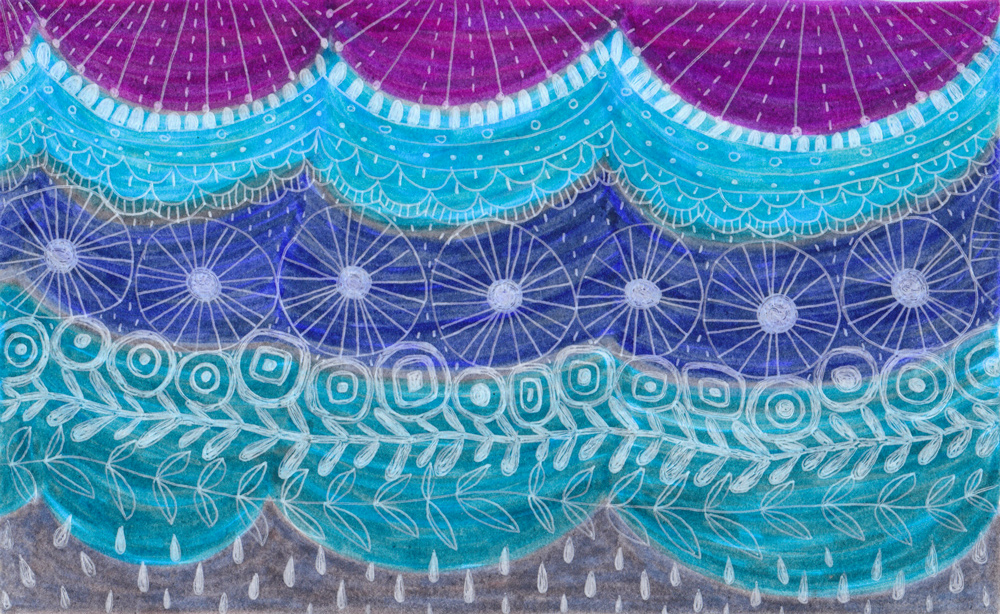
p.s.  I have two art shows going for the month of October!  Original works from my 365 Day Happiness Project will be on display and for sale at Common Ground Coffee & Cupcakes until the end of October (*Artist reception on Friday October 2, 6-9pm!) and my brand new watercolor abstract paintings will be on display and for sale at Geraldine’s Counter during the month of October as well.

yuko_flowers


6 Things You Can Do to Make Time for Daily Creative Practice

piggy-bank_lores

Hi!

I shared in my last blog how I stay productive by not working for hours on end but rather working in structured chunks of focused time.

Before I quit my day job, I thought it was going to be magical having all these hours in a day to do what I love to do.  In a way, it is true.  I do have more time and flexibility to work on my art business.  But it’s also true that time is still limited, and this somewhat false idea of “having all these hours in a day” sets a tricky expectation for me as I settle into my new routine.

Let’s face it.  You’re not just doing “what you love” all the time, either.  For me, what I love the most is actually making something.  But I also manage my social media, write blog posts and newsletter (which I’ve come to love more), take and edit product photos, update my online shops, work on commission, answering emails, doing my finances, ordering supplies etc. etc. etc.  And they actually take up a lot of time!!  In fact, some days I spend most of the day doing those things and spend very little time making art.  Sigh.  That reminds me, I was telling someone when they asked me what I did at my day job that I spent majority of my time responding to emails.  Because that’s what I ended up doing all. the. timeDouble sigh.

When I had a day job, I worked for 10 hours per day, 3 days a week.  I also spent about 1.5 hours per day commuting.  All in all, it was not terrible.  I typically had two weekdays, weekends, and weeknight after work to do my art.  Time seemed much more precious then, and I treated it as such.  It also provided structure and routine in my week, which helped me to function at a higher level.  Oh by the way I read somewhere that moms are the most efficient people.  I totally believe it!!

Since I quit my day job I’ve been shifting my mindset around time a little bit.  Even though I don’t have a day job to go to, which on average took up about 34 hours per week plus all kinds of mental space, I still only have 24 hours a day.

I’m also trying to put some safeguards in place so I won’t burn out.  That means I don’t work late into the night any more, and I’m taking at least one day off a week unless I really have to work.  AND I’m planning on taking every 7th week off to step back from my day-to-day business stuff and recharge.  My first small scale sabbatical will be the week of October 5th!  I’m super excited about it and will share more later!

Anyway, going back to the issue of time management, I developed a daily creative practice when I started my 365 Day Happiness Project in April 2014.  I knew that in order to become a successful artist, I needed to put myself out there every day.  It doesn’t have to be a masterpiece every day.  Just doing the work consistently is what’s most important.  Creative muscles need to be exercised every day.  And just like physical workout, you need to be pushed just enough so you know you are capable of accomplishing something you didn’t think were possible.

The daily art practice added about 1-1.5 hours per day to my already pretty busy life with a day job, managing my art business (all the un-fun things I mentioned above), and other miscellaneous responsibilities (e.g. family time, taking care of pets, maintaining our vegetable gardens, volunteering, chores etc.)  The daily art project also involved taking a photo, editing them in Photoshop, and scheduling a post on Facebook, twitter, and blog.

On my typical work day, my schedule looked like this:

6-7:15pm: Get up, eat breakfast, pet care, grab stuff and go.

7:15-8am: Drive to the pool I used to exercise at.  It was very close to the office.

8-9am: Workout

9-9:30am: Shower, get dressed, go to work.

9:30am – 7:30pm: Work!

7:30-8pm: Commute home.  Fortunately, by this time of the day the traffic is not as bad.

8-9:30pm: Eat dinner (my husband usually cooks dinner, which is super helpful!), watch a show on Netflix, catch up, do the dishes.

9:30-11pm: Art time

11-11:30pm: Get ready for the next day and go to bed!

Here is the thing: In order to commit to having a daily creative practice, you do need to say “NO” to things.

Yes, it sucks.  But unless you have some sort of magical superpower, that is the only way you can create more time to work on your art.  Wishing there was more time won’t help you, but actually stop doing other things will.

Here is a list of things I said “NO” to in order to create time to pursue art:

  1. Paycheck and benefits from having a full-time job since I cut back on my hours at my old day job
  2. Time with my husband
  3. Earlier bedtime
  4. Binge watching shows on Netflix
  5. Following other creative pursuits (e.g. crocheting, sewing, needle-felting etc.)
  6. Seeing friends
  7. I also stopped volunteering for a group I was with for many years at the end of 2014.  It was a very difficult choice but needed to happen.  I’ve said this before, but it’s not just time we’re concerned about.  You need to have enough mind space to do the creative work, too.

Not having a day job allows me more flexibility, but I still say no to a lot of things because I don’t want to go down a slippery slope.  I remind myself that I didn’t quit my day job to relax and have fun (=I’m not retired yet :))  Because I no longer have the external pressure, I need to be even more disciplined about how I spend my time now. 

If you’re reading this and thinking, “Well, I still have a day job (and/or kids, or any other major responsibilities) and can’t imagine fitting in a daily creative practice!!” don’t worry, I have some suggestions!

1) Identify your big goal and write down how having a daily creative practice is going to help you achieve the goal. 

For many people, it’s difficult to make a commitment or sacrifice something if you’re not connected to the goal or a cause on a personal level.

Start out by exploring why this is important to you.  Find your internal motivation.  Why do you want to do this?  It needs to be your choice.  Not because I’m telling you to do it or everyone else is doing it.

How would your life be different if you made art every day?  How could your daily practice get you closer to your dream?  Write them down and read it whenever you feel discouraged!

2) Review your daily routine and identify “time wasters.” 

How much time do you spend scrolling through your social media feeds?  Or watching endless funny cat videos on YouTube? I know they want you to spend as long as you can on there.  Or binge watching shows on Netflix every night because some of the shows are SO addictive?  (Hello, Agents of S.H.I.E.L.D.!)  I’m not immune to it myself, nor am I saying you can’t have any of it.

I’m just saying be mindful of how much time you’re spending on things that do not get you closer to achieving your goal.  You might need to be your own parents sometimes and say things like, “No Facebook until your daily practice is done!”

The way I manage it is: I check my email and all of my social media after breakfast and respond to everything I can then.  Then throughout the day, I post things or respond to things as I take my mini breaks between my focused work time.  I take about 15-30 minutes each time to do so depending on what I need to do and how long I’ve been working.  Once my break is over, I close all the unnecessary tabs on browser, put my phone on airplane mode, and get back to work.  Before Dinner, I check everything again for the last time that day.

We watch one episode of a show we like on Netflix during dinner, and one episode is about 40 minutes.  If I have more work to do after dinner, then I’ll do that after one episode and may resume watching more after my work is done if it’s not too late (remember I try to go to bed by 10 nowadays…)  If I had a super productive day before dinner or it’s my day off, then we splurge and binge watch something or watch a movie.

3) Think before saying “YES”

Do you like to help people?  Do you have skills other people value?  Or are you just so awesome that people want to do things with you all the time?  These are not bad things!

But saying “YES” to everything you’re invited to will definitely not help you have more time for a daily creative practice.  When someone asks you to ______ (e.g. volunteer, attend a charity event, go see a movie, babysit etc.), know it’s OK to think before giving them an answer.

“NO” is always an option.  That’s why people ask, not command.  (Note: If your friend is demanding you to do something for them, well, then it’s time to evaluate your relationship… )  People are resourceful.  They will find another solution if you can’t help them.

If you feel selfish prioritizing your needs before others’, imagine one of your closest friends saying no to one of your events because they’re working hard to make their dream come true.  Yes you might feel disappointed, but you also want to understand and support them.  You can always appreciate their invitation and let them know that it’s not a “NO” forever.

4) Schedule time and stick to it. 

If you’ve been reading my blog, you know this is my mantra.  If there is a regular time that works for you, even better.

What about getting up a little bit earlier before your family wakes up?  Or later in the evening after they go to bed?  Lunch time at the office?  Or doodle during your meetings?  If you can’t take a chunk of time, even 15 minutes would work to do a quick sketch of whatever you have.  If it takes too much time to decide what to draw every day, draw the same thing every day but from a different angle or use a different medium.  Try a different color pallet.  Draw it in different styles or proportions.  Enjoy the process!

5) Focus your goal around consistency and not how perfect it is.

I know I’ve said this before, but I’ll say it again.  Your success should be measured by the act of creating something every day and not by how perfect it is.  Oftentimes people get discouraged and quit because they have a vision of what their creation should look like, and what they make isn’t perfect.  Make it your goal to show up every day even if your work isn’t a masterpiece.  Keep showing up and practice, and you will produce higher quality work more consistently!

6) Know what works for you and your situation.

Be creative in your problem solving.  You know your situation and what works for you the best.  I’m a big fan of structure, daily routine, and public accountability, but I know it doesn’t work for everyone.  Some people prefer having more flexible tools or having a one-on-one accountability, like having a coach, to stay motivated.

I mostly share tools that work for me not because they’re better than other methods – I want to demonstrate to you that when you stick to things that work for you, you can achieve higher results.

I hope these tips were helpful!  What can you do today to get closer to your dream goal?  I’ll be back with more tools for motivation next week 🙂

Talk to you soon!

xoxo Yuko

yuko_flowers