Lessons learned from my not-so-restful sabbatical week

I took my sabbatical week off during the week of 8/1. (You can learn more about my small scale sabbaticals here.)

I was supposed to take it off the week before, but I had so much to do, so I decided to push it back one week.

The week before I’d originally planned to take my week off, I was planning on making 4 tutorial videos for Sakura of America, and it took a lot longer than I anticipated (duh!)

And at the last minute I was invited to be at a craft show, and I agreed, so I spent hours preparing for the show at the same time.

It became obvious to me that I wasn’t going to finish the video project and tie all the loose ends before the end of the week.ย 

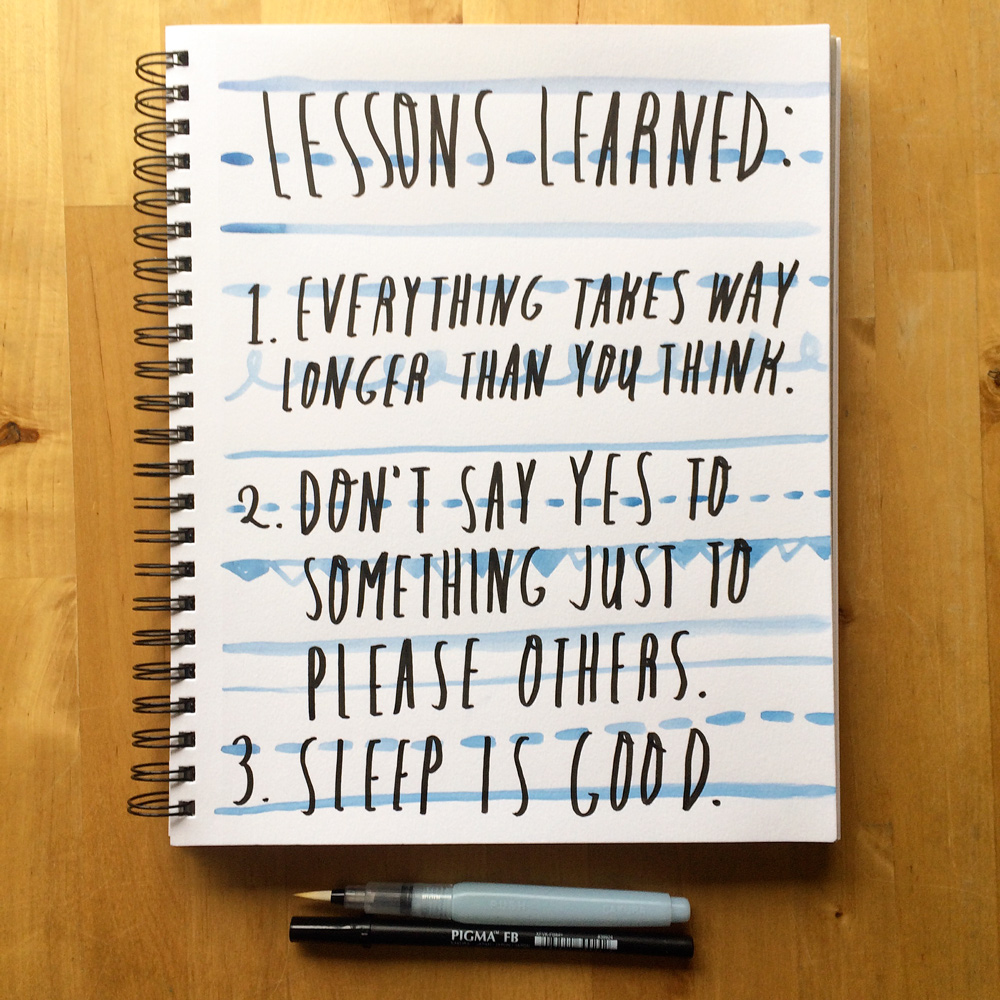
Lessons-learned-sketchbook_1000px

Rather than doing a “half-on, half-off” sabbatical week, I decided to push it back one week so I could finish everything and fully enjoy my time off the following week.

Or so I thought.

Unfortunately, I wasn’t able to tie all the loose ends by the end of that additional week, so some work did spill over to my sabbatical week. Sad face ๐Ÿ˜ฆ

I’d put in long hours the week before and worked the craft show all day Saturday 7/30, so I was really wired going into my week off.

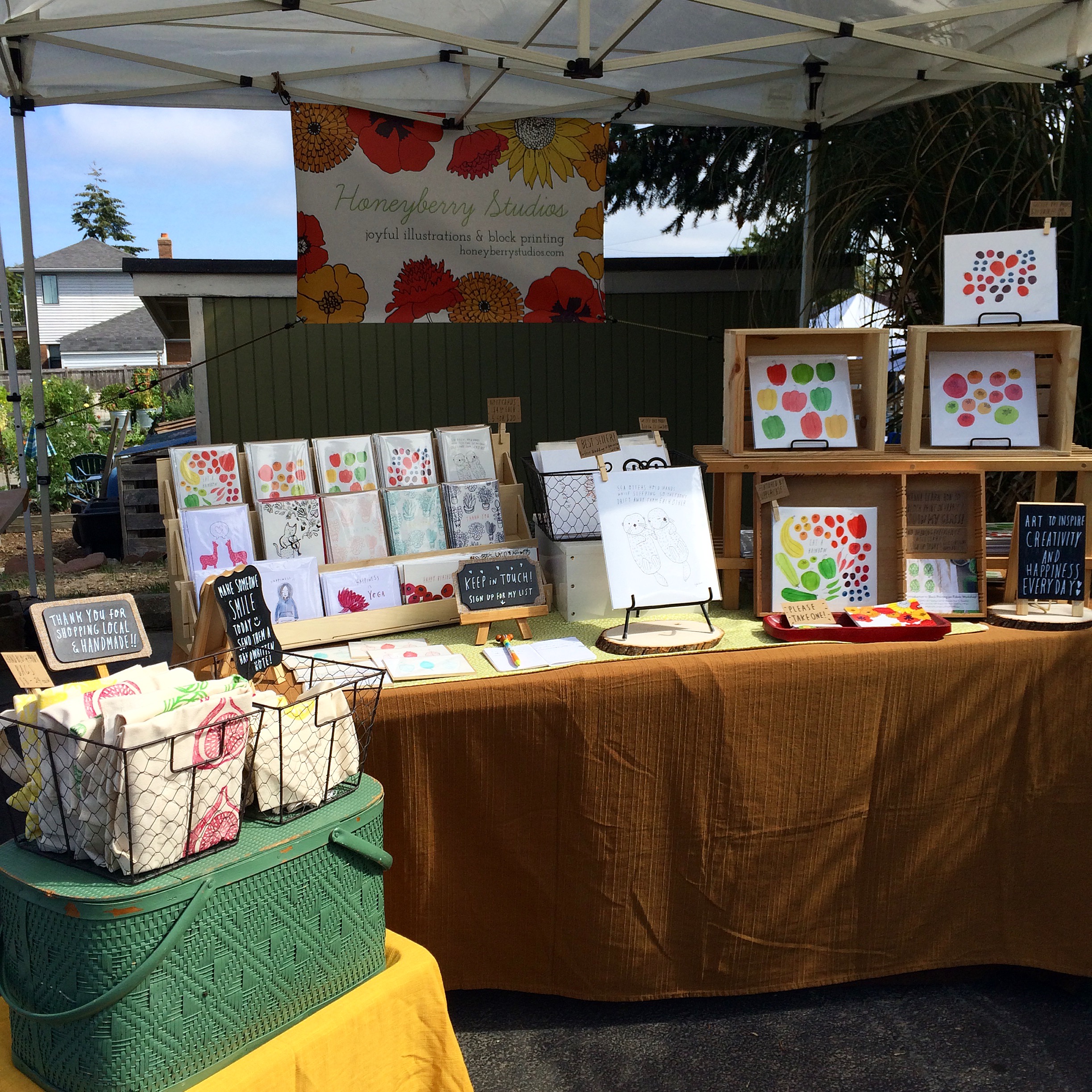
Ballard craft show booth
My booth at the show ๐Ÿ™‚
Ballard p-patch
And it was a gorgeous day to be outside!

Plus my husband Dave had been away for 2 and a half weeks for work and came back on late Saturday 7/30 night. Originally, he was going to come home on Sunday 8/1, so it threw me off the loop.

And whenever he comes home late, I go to bed at my normal bed time but just can’t fall asleep until he gets home…

As an introvert, even though I love and miss my husband very much while he’s gone, I also enjoy my quiet aloneย time. And it usually takes me a few days to adjust to having him around again.

Oh, and we had a couple of guests stay over at our place with kind of a short notice… and I’d already scheduled my social time with some friends that week (Max 3 social engagements per week!). So I ended up having a bit more people time than I’d wanted.

salad temaki bar
We hosted a hand-roll salad bar one night, and it was fun and delicious…

Even though I generally have a good time when I’m with friends, I prefer to have them scheduled in advance and need to have a good amount of down time in between to recharge.

And as for work, I got an inquiry from a customer who wanted to place a big rush order of my block printed tote bags on the first day of my sabbatical week.

hand block printed artichoke tote bag
My hand block printed artichoke tote. Cute, yes?

Initially, I said no because there was no way I could have the goods ready within the timeline, but the customer was really interested in working with me.

So I tried to make it work by having them screen printed rather than me hand printing them. And that meant a lot of back and forth with the print shops and the customer throughout the week…

After all, the customer decided not to place the order because the timeline didn’t work for them. Which was fine, but I couldn’t relax completely until all the loops were closed…ย 

I also have a new class to promote, followed up with people who’d just signed up for my email list, and Instagram just rolled out their Snapchat thingy (a.k.a. Instagram Story) and I got embroiled in that too!!

The Seafair, which is a big summer festival in Seattle, was going on during my sabbatical week, and we live very close to where the Blue Angels perform. Their performance is cool and all, but the noise is totally unbearable. It is SO LOUD.

Oh, Blue Angels... Only if you were quieter...
Oh, Blue Angels… Only if you were quieter… Photo credit: Monica Zaborac

So on Saturday, I tagged along Dave’s teaching gig at a university to get away from home. They had a pretty loose, hands-on day for his class, and I got to hang out with Dave part of the day and read, too.

Olympic Sculpture Park
And I went for a walk in the Olympic Sculpture Park in Seattle waterfront with a good friend ๐Ÿ™‚

On Sunday, I ended up doing chores and went to see a movie (BTW, loved the new Ghostbusters movie!!) to get away from the Blue Angels noise again… ๐Ÿ˜€

I LOLd so much!
I LOLd so much!! ๐Ÿ˜€

Before you know it, my sabbatical week was over. O.V.E.R. Sigh.

It wasn’t the most relaxing week off, and I was pretty bummed about it.

Self-care is a top priority of mine, and not having a regular down time is pretty hard on me. When I can’t get enough rest, I try to breathe and be more compassionate with myself. I do what I can to take care of myself and just accept the things for what they are.

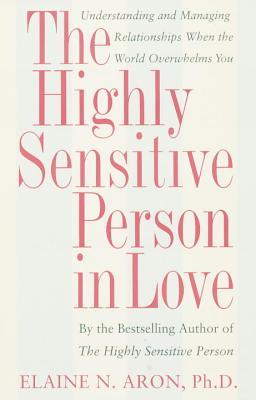
With that being said, I did spend some time reading. I’ve been reading “The Highly Sensitive Person in Love” by Elaine N. Aron, Ph.D.,ย and it’s fascinating! (In case you missed it, I talked about my Highly Sensitive nature in this post.) I love exploring my inner world… โค

The Highly Sensitive Person in Love book cover
This!

I also made some art for fun during my sabbatical week.

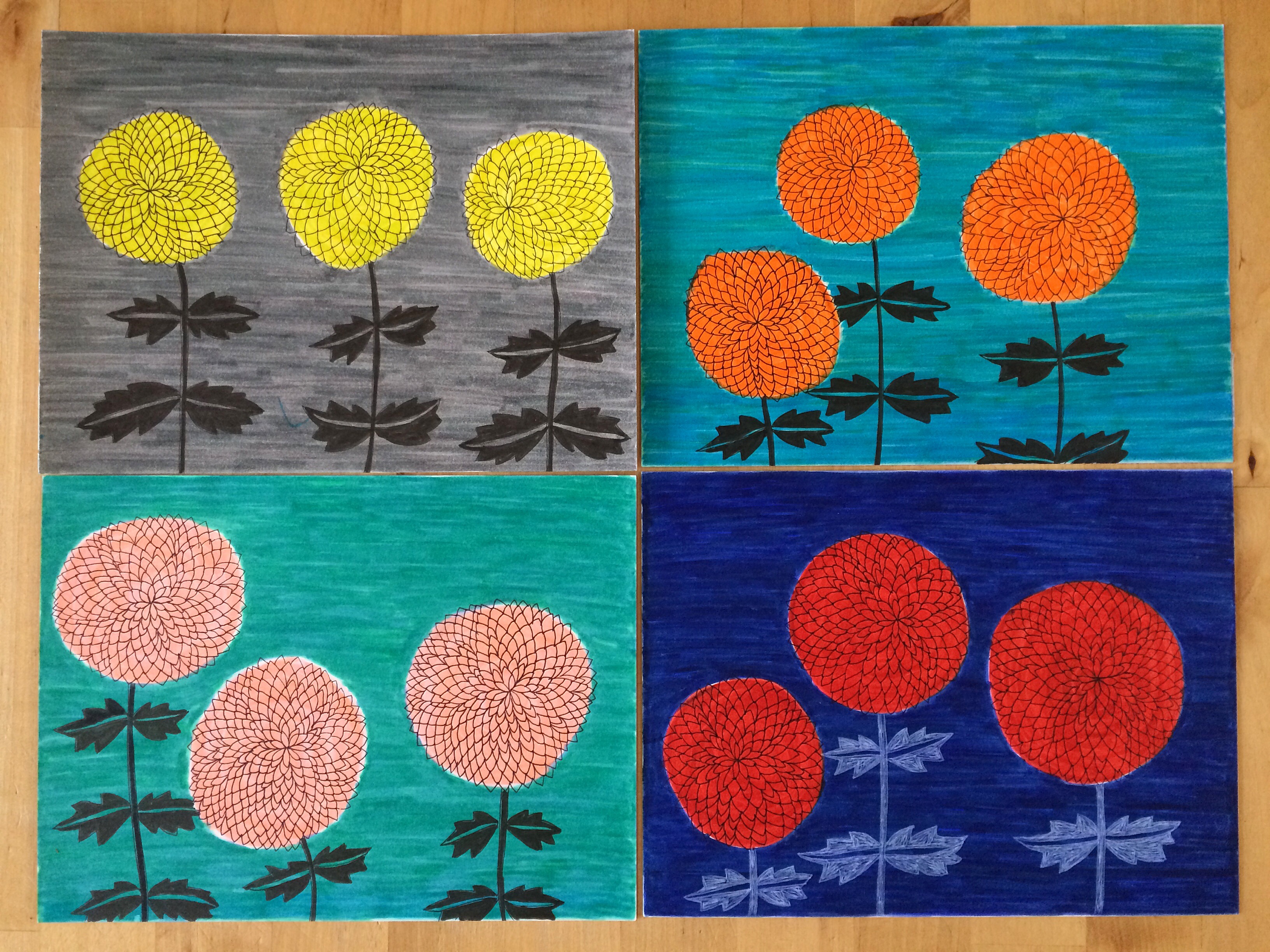
Dahlias marker drawing
Dahlias with Sakura Koi pens, micron pen, and a gellyroll pen.

These dahlias were inspired by the beautiful community garden I was at for the craft show โค

I also got to spend more time with Dave than usual and slept more (including naps!) so I’m more refreshed to start my work week.

I’ve got a couple of trips coming up this summer, too, so even though I didn’t get a full time off last week, I’m glad some important work got done! It’s a balance, I guess…

Hope you’re getting some relaxing on this summer!

xo Yuko

Yuko Miki Honeyberry Studios Headshot

From the Sketchbook: being here and now

Since I went to the Vipassana 10-day meditation retreatย in June, I’ve been working on staying mindful and practice meditation daily.

It has helped me to lower my stress and anxiety about the work and the unknowns of the future. Whenever I start to feel overwhelmed about what mayย happen, I can bring my focus back to my breathing and notice how I’m feeling in my body now.

It allows me to know on a very fundamental level that whatever I’m worried about isn’t actually happening right now. Even if it lasts only for a split second, it calms my mind.

I started making new drawings to express my appreciation and to encourage myself to continue with the practice.

Though it was not my intention to create a series at first, more ideas kept popping in my head. And creating these drawings is sort of meditative, too!

live like you have everything you need meditation watercolor drawing
Live like you have everything you need.
All-beings-be-happy-meditation watercolor illustration
May all beings be happy, peaceful, and liberated.
I'd rather be here and now meditation illustration
I’d rather be here and now.

Last year I had a lot of fun making a wall calendar, and perhaps this could be my new calendar design for 2017?

I personally would like to have this hanging on the wall to remind me to breathe ๐Ÿ™‚ Wouldn’t you?

p.s. You can follow me on Instagram to see more works from my sketchbook!

xo Yuko

Yuko Miki Honeyberry Studios Headshot


My typical day in the studio

Last month I participated in the Shoreline Arts Festival for the first time.

Shoreline is a city that’s located just north of Seattle. The Arts Festival isย their long running annual summer event (it was their 26th annual festival!), and I had a great time! Everyone I interfaced with, staff, volunteers, and people in the community, were very welcoming and friendly. I got the vibe that the community supports arts of all sorts, and it was so nice!

Shoreline Arts Festival Honeyberry Studios booth
Me and my booth at the arts festival!

As part of their marketing for the event, the Shoreline-Lake Forest Park Arts Council wanted to feature participating artists, and I got the honor of being interviewed for their blog article.

Their questions were really great, and it made me reflect onย my inspirations, routines, and creative process. I don’t normally take the time to think about those things every day and wanted to share them with you! (I modified the original interview for the blog.) Perhaps it’ll inspire you to reflect on these yourself… ๐Ÿ™‚

Hope you enjoy!

-Describe a typical day in the studio. Do you have a routine? What do you listen to when you do your creative work?

I work out of our small apartment in Columbia City (a neighborhood in SE Seattle) and my studio is usually my dining table ๐Ÿ™‚

I usually get up between 4:30 and 5am every morning and meditate for half an hour to an hour. I sit quietly and focus on my breathing. My mind tends to wander, thinking about my day and what I need to do. When I notice my mind going elsewhere, I try to bring my attention back to my breathing and how I’m feeling in my body. Often my mind keeps wandering the entire time I sit, but it still helps me to start my day with calm and quiet mind.

After my meditation, I go to my workout class at the gym in the neighborhood or do some writing on days I don’t have my workout class.

I tend to do more of a “brain” work in the morning, like writing, marketing, and doing the finances etc., as I don’t naturally enjoy those tasks, and it takes more focus, and mornings seem to work better.

I often work on my creative/art work in the afternoon. I like to switch things up from doing a lot of the computer work in the morning to doing work using my hands in the afternoon if I can. I often doodle or sketch ideas in my sketchbook for fun, and I get most ideas for my art products (i.e. greeting cards and art prints) from my personal drawings. It can happen anywhere – at my desk in the home office, my dining table, or on the couch ๐Ÿ™‚

Although I occasionally do writing at coffee shops, I hardly ever do my art work outside the home. Creative work feels more vulnerable, and I prefer to do it alone in the comfort of my own space.

I also set aside a couple of hours in the afternoon every week to read articles or do some learning, like watching a webinar. These are “fun” things for me and kind of a reward after taking care of my “business-y” tasks!

I make a point of not checking my email and social media until after my morning routine of mediation, workout, some writing, and breakfast because as soon as I dive into my email and social media, my mind gets cluttered with information. I have all the browser tabs and notifications off during the day so I don’t get distracted. I do manage my email and social media throughout the day when I have a small window of time between my other tasks.

One of the perks of being an independent artist is you have a lot of flexibility! Since my husband is also self-employed, we often take a break during the day to run errands or do some work in the gardens. When I had a regular job in the office, I would come home exhausted and then worked on my art after dinner and weekends, so we didn’t get to spend a lot of quality time together. I really appreciate being able to be around him more ๐Ÿ™‚

I work until 5:30-6pm or so and make dinner if it’s my turn to cook.

As far as what I listen to while I work, I either don’t listen to anything or play some easy music on Pandora (my favorite is Laid Back Beach Music station) while I write. When I do more visual work, I listen to a couple of podcasts related to business or storytelling podcasts, like This American Life and Moth Radio.

-What is your artistic medium of choice? Why?

My favorite artistic medium is pen and ink, markers, and watercolor. I use Sakura Pigma Micron pens and Koi Coloring Brush pens a lot for my drawings. The Micron pens work so smoothly and consistently. Their Koi Brush Pens come in a wide range of beautiful colors, and I enjoy layering the colors to create subtle hues. They’re portable and easy to use when you’re on the go as well! Perfect to take with you when you’re out and about and do a little sketch.

I’ve always enjoyed painting with watercolors, too. I love how they create softness and radiant light on paper.

I also block print on fabric and paper. I love the whole process of drawing, carving, and printing. It’s very tactile, and I find the block printing process to be meditative.

-Who or what inspires your work?

I often find my inspirations from nature, animals, and food. I love to eat!! ๐Ÿ™‚ I notice little things when I walk around the neighborhood, like leaves on the ground or beautiful flowers in my neighbors’ gardens. We also grow some veggies at our apartment and a community garden, and it helps me stay connected with the soil and seasonal changes.

When I notice small everyday things that make me happy – like blueberries in our container garden glistening with morning dew or my cat happily napping in his favorite chair in the sunshine – I try to remember that feeling and express the joy in my artwork.

-What do you consider your biggest artistic achievement or accomplishment?

I’m a self-taught artist and began my practice in my early 30s. I was drawing and painting for several years as a hobby but never thought I could be a “real” artist. But last summer, I took a leap of faith and quit my day job to pursue my passion full-time!

It’s definitely not easy to make a living from your passion – I’ve experienced many ups and downs in the last year! But I feel so privileged to be able to follow my passion. I’m learning something new every day, and growing my creative business has been so rewarding.

-If you could only use one color for the rest of your artistic career, which would you choose and why?

Wow, what a great question! I would say black (though it’s not really a color…) if I had to choose one.

I love to create simple pen and ink line drawings and have phases every now and then where I create art with just black pen or sumi ink on white paper. No colors added. I enjoy the clean lines and how expressive simple black and white line drawings could be!

-Whatโ€™s the best advice you’ve ever gotten about being an artist?

A few years ago, I was studying Graphic Design at Bellevue College. At the time, I didn’t believe I could be a working artist and wanted a more practical “job” skills that were also creative.

While I liked learning designs, I also had this nagging feeling that it wasn’t something I loved.ย 

On the last day of my portfolio review class, my instructor noticed how much I incorporated my drawings and illustrations in my portfolio pieces. She said I wasn’t a bad designer, but I should follow my heart and pursue art if that’s what I really wanted to do.

It’s kind of silly, but that one comment she made gave me a permission to follow my heart. It finally clicked for me that what I wanted to do was to make art, and that it was OK to do so wholeheartedly.


3 advices my business mentor gave me so I won’t go out of business

banana-split_watercolor illustration

I met with a SCORE mentor the other day and got a few helpful business advice. (And no, it has nothing to do with banana split… :D)

SCORE (https://www.score.org) is a non-profit association that provides free or low-cost resources for small business owners, including free one-on-one mentorship from an experienced business owner.

I’ve known about them for many years but never used their services before. I just recently decided to take advantage of their offerings after reading a very informative newsletter from Meighan O’Toole and her positive experience working with the SCORE mentors.

I’ve been feeling a bit lost in my creative business lately and thought talking with an objective business mentor would be a good thing!

So I contacted them through their website and made an appointment to meet with a volunteer business mentor, Bernard, at their downtown Seattle office.

Bernard has been a mentor for 13 years and has built a very successful real estate business. I was a little surprised to be matched up with someone whose experience is in a totally different area. But he’s helped his wife grow her art business and has lots of artists in his family, so he was familiar with many of the struggles I’ve been experiencing as a new-ish creative business owner.

You might remember in January I spoke with a business coach and decided to focus on increasing the sales of my art products this year. (I talked about my process in this postย if you’re interested.)

Though I still prefer making and selling art to be my main income source, I quickly realized running a product-based business isย very expensive!

It requires certain up-front cost to have an inventory of products to sell, and it could take a long time before you actually start making a profit.

My sales have been increasing gradually over the last year (yay!), but I’ve been constantly running out of money to restock my products on the shelf (boo!)

It feels like I have an expensive hobby rather than a thriving and profitable business. Yikes.ย 

I knew I needed to shift my focus and try to meet my short-term financial goals so I’m not actively going out of business!!

I shared my thoughts and feelings with Bernard, and he validated what I was going through. And that validation right there helped ease my anxiety quite a bit. I tend to think and analyze things very deeply in my head, and it gets overwhelming! Even one small external validation helped take the pressure off my overworked brain and offered me a sense of clarity.

After hearing my pain points, he gave me 3 pieces of advice:

Advice #1. Expand teaching to increase the cash flow.

Doing more client work is one option to fix the cash flow problem. You do the work, get paid, and move on, right? It’s a lot more straightforward than building a successful product-based business for sure…

But I hate client work.

OK, hate is a strong word… it’s just not my favorite. I talked about my high sensitivity and the struggles I have with conflict and rejection in this post, but making art that needs to align with someone else’s vision is very stressful for me.

I love working on a commission where the client trusts my process 100% and gives me a total creative freedom. It happens, but it can be a lot of work to build that kind of relationship with a client, and I sometimes wonder if it’s worth all the stress…

Teaching can also be a good source of income for an artist.ย 

And teaching is definitely a better fit for me. It gives me an outlet for creativity and also satisfies my need to help people ๐Ÿ™‚ As an independent teacher, I have a lot of freedom to decide what/when/how to teach, and I can experiment to improve my students’ learning experience as I see fit.

[My Follow-up Action] I’ve reached out to a few more art schools and art supply stores to inquire about teaching opportunities. My block printing workshop has been my bread and butter lately, and I have more ideas of what I could be teaching in the future. Helping people realize their creative potential is so rewarding!

Advice #2. Have my greeting cards and art prints available at more retail shops.ย 

Bernard suggested I identify retailers who serve my target audience and pitch them my products to provide more buying opportunities to my potential customers. It turns out his wife is a jewelry maker, and he’s done in-person marketing and promotion going to galleries and shops door to door to sell her work.

Making cold calls/visits give me an anxiety – you know, I’m an introvert and am NOT comfortable with that kind of marketing!ย 

I’d toyed with the idea of wholesaling my goods before but never took any action to move it forward. I just didn’t feel ready. I felt overwhelmed thinking up all the “what-ifs” – what if a major retailer wants to order thousands of my cards?? I can’t afford to fill that big of an order! And what if nobody wants to sell my products?? Sad face… ๐Ÿ˜ฆ

While it’s fine to be cautious, I realized neither scenario was likely… ๐Ÿ˜€ I realized I had to start somewhere. I can start small, which has been my motto since I started my art business.

[My Follow-up Action]ย I’ve made contact with 5 retailers (galleries, gift shops, art museum etc.), introduced myself, and dropped off samples or emailed them my product info. And I already got 2 wholesale and 1 consignment accounts that want to carry my cards and prints! YAY!

It felt awkward to walk in to someone’s space and pitch my work at first, but really, you’re just asking a question. AND if your products are a good match, you’re actually helping to make their customers happy, which is what the retailers want! So it’s a win-win ๐Ÿ™‚

I reached out to retailers that I’ve been admiring a lot – they carry beautifully designed, unique, and high quality products for home and gifts. And when they tell me they like what I create and want to carry them, I feel like I’m walking in the clouds ๐Ÿ™‚ Such a nice validation and a confidence booster!

Advice #3. Lower the cost of production to increase the profit margin.

This is like ย – duh, but something I’ve been putting off tackling because it’s overwhelming to think about.

Since I don’t have a ton of cash to invest in up front, I end up just ordering small quantities of my products from the printers and keep ordering more as I sell more. I also want my products to be high quality, so the cost of production tends to be higher. Naturally, my profit margins are pretty slim especially when I do wholesale or consignment where I usually get 50% of the retail price.

I don’t want to compromise the quality of my products and can’t afford to have a huge inventory right now.

If I could order my products in thousands at a time, itย will save on the cost per unit… It’s a conundrum, and I don’t know what to do about at it… :p

[My Follow-Up Action]ย Well, I haven’t really done anything with this except to casually think about it and then forget about it… I know it’s important for me to figure out the solution, though. If I keep doing what I’m doing, I won’t be able to effectively scale up, or worse, I’ll definitely drive myself out of business!!

I need to sit down and do more research on manufacturers and some serious number crunching. Two things I’m not excited about…but it’s not an option if I want my business to thrive! And if I work on my advice #1 to increase my cash flow, it will naturally help.

Our meeting was short and sweet but very helpful. I left their office feeling motivated and energized!ย 

Support from family and friends are great – I couldn’t do this without them! No doubt.

But often when I get an unsolicited advice from people I know, I get annoyed and defensive. It’s not that their advice isn’t helpful – it’s more that I’m not ready to hear it. I get vulnerable and insecure. My focus isn’t on what they’re saying or how valid they are. I instead start wondering why they’re giving me the advice when I’m not asking for it. Uh oh, do they think I’m doing a bad job?? Do I need saving??

That’s why I find it so valuable to get an advice from someone who is not emotionally invested in your success.

First of all, I’m less defensive and more willing to listen when I’m actually seeking for an advice. And it’s easier for me to not react emotionally to their feedback when there is a clear expectation of our roles (i.e. a mentor and a mentee). I can accept their input as an objective observation and nothing more. It’s very refreshing!

SCORE has 320+ chapters throughout the US, and you can find your nearest SCORE location here. You can meet with your mentor multiple times, and if your first mentor is not a good fit, you could request to meet with someone else too. They’re there to help!

I’d definitely go back and use their services in the future when I’m faced with new challenges or need a sounding board outside of my regular circle of people again.

Here is to our growth!!

xo Yuko

Yuko Miki Honeyberry Studios Headshot


Illustrated Recipe: Raw Zucchini Hummus

I love to cook with seasonal fresh ingredients. During the summer, our gardens provide us with abundance of summer veggies, like cucumbers, eggplants, tomatoes, and of course, ย zucchinis.

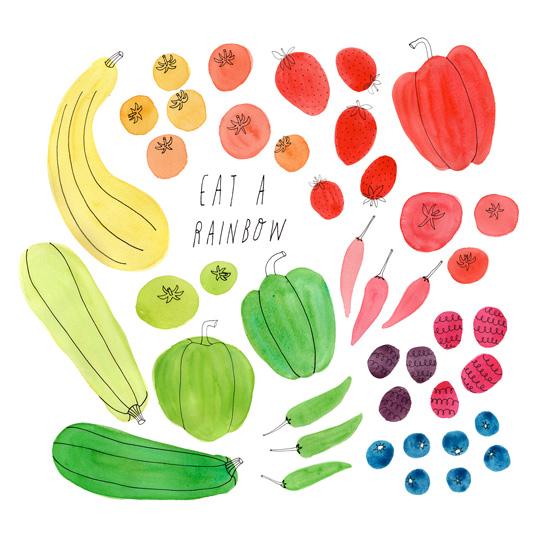
Eat a Rainbow summer vegetable watercolor illustration
Summer is here!! Eat your rainbow every day ๐Ÿ™‚

I’m always looking for creative ways to eat zucchinis because they usually come in such abundance.

I have a few go-to zucchini recipes, but I get bored of them after a while… ๐Ÿ˜€ And before you know it, your crisper gets so full of them! You can’t fit anything else in there, and when you try to jam in your lettuce, they end up getting smushed by the firm zucchinis. I’m sure I’m not the only one who occasionally resents how prolific they are!!

During the summer our tiny apartment gets overheated due to the big west facing windows and the subpar insulation.ย We try to cook outside on our BBQ grill whenever possible so we don’t have to turn on the oven or the stovetop.

I was delighted to find this raw zucchini hummus recipe on The Detoxinista because 1) it uses the zucchinis raw and 2) I love hummus!

(BTW, I loveย The Detoxinista so much! Probably my #1 favorite cooking/recipe blog right now. Everything Megan posts there is pretty easy to make, and it gives great options to accommodate many food allergies/sensitivities!)

Bean-free raw zucchini hummus recipe from detoxinista.com

I have allergy to several kinds of beans, and chickpeas, depending on how they were prepared, are sometimes hard to digest… so this zucchini hummus is a great bean-free alternative!

It’s light and refreshing and goes great with your favorite veggies and crackers! YUM.

And I love how easy it is to put together. Just chop up the ingredients and blend them together! That’s my kind of cooking… ๐Ÿ˜€

What’s your favorite zucchini recipe? Tell me in the comment below and help me keep up with our zucchini production this summer!!

xo Yuko

Yuko Miki Honeyberry Studios Headshot


My Favorite Tool: MOO Carve

I often value recommendations on tools and resources from other artists, and once I find the “one” I love, I become a loyal fan and never look back!

Theseย MOO Carve Professional Carving Blocksย are one of those things.ย 

moo carve block printing block

It’s my absolute favorite carving blocks to use for my block printing practice both professionally and for fun!

Let me back up a little and tell you how I got started with block printing first.

I took an amazing e-course, Design, Carve, Print, by Jen Hewett in the winter of 2015 and got immediately hooked.

block printed tea towel teapot coffee pot tea cup design
My first fabric block printing project in the winter of 2015.

I love the process of block printing. It engages your creativity in many different ways through the entire course of production, from drawing on paper to carving the block to designing and printing on fabric.

Before I learned how to block print on fabric, I tried ย linocut once after buying a beautiful linocut piece at a farmer’s market and loved how it looked.

But the linocut block was very difficult for me to carve as a beginner, and I got really discouraged…

I just made a very small design because it was so hard to carve... but that meant I had to carve out all the background... linocut fail.
My first and only linocut project. It was very hard to carve, and I didn’t enjoy working with the oil-based ink, either. So messy!!

After taking Jen’s course, I learned about MOO Carve, and it totally changed my block printing world!

It’s a little thicker than the block printing blocks you get from other companies (about 1/2 inch thick). Their material is very similar to rubber eraser, and it cuts like butter! I like how easy it is on my hands and how quickly I can carve my designs.

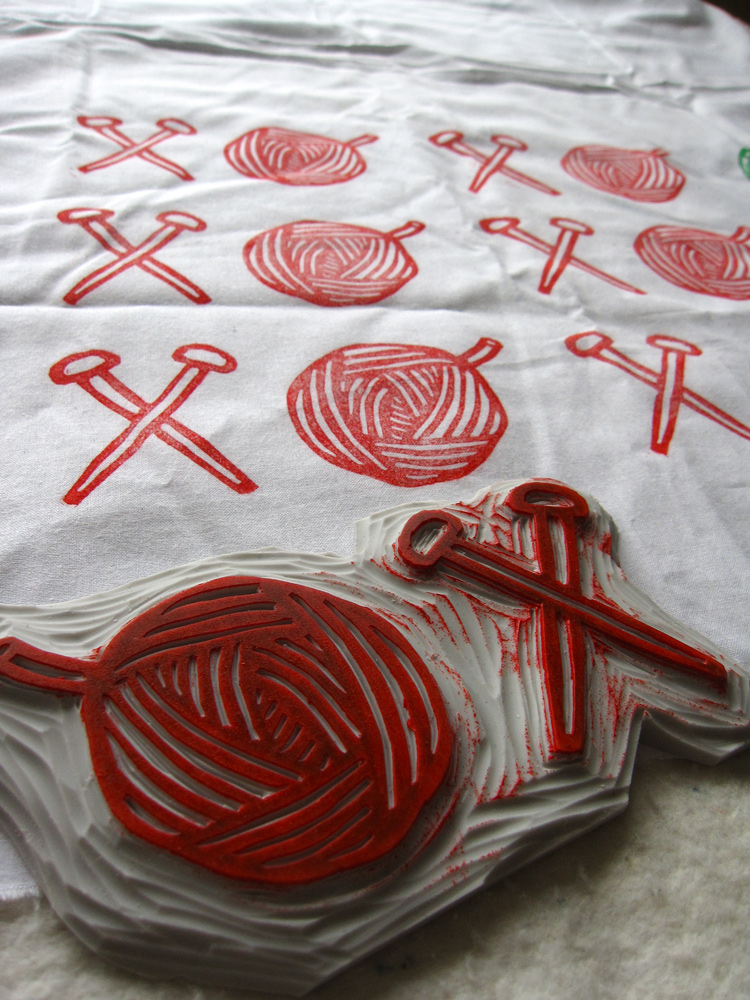
block printing on fabric xoxo valentines design
Valentine’s XOXO design for knitters/crocheters. February 2016.

One drawback of using a softer material is, if you’re not paying attention, it is pretty easy to cut through parts you aren’t supposed to. I’ve also broken off parts of my block (especially smaller details) while washing… Oops.

(If this happens, you can try to fix it with the super glue or “modify” your design a bit around your mistakes… It’s an opportunity for creative problem solving! :))

Other than a few mishaps here and there, all of my blocks have fared pretty well after making hundreds (yes, hundreds…) of prints!!

moo carve block printing blocks and tools
Some of the fall/winter designs from last year. I use the Speedball lino cutter and baren.

It’s been almost a year and a half since I took my bock printing class. I was making block printed products to sell for a while but decided to cut back on that this year as I was afraid my passion was dying…

For now, I mainly block print for fun. You can see my most recent printing and sewing project in this post.

I’ve also been enjoying teaching others how to create their own beautiful block printed fabrics since this spring!

IGIMO-class-photo-collage-050216_1200px
Teaching block printing is so much fun ๐Ÿ™‚

I use MOO Carve blocks for the classes I teach as well, and many of my students are surprised to learn how easy it is to work with the material!

It’s a little pricier than some other brands,’ but it’s well worth it to me. I usually buy them from Blick online store or Amazon depending on what else I’m buying.

If you’re a print maker, give it a try and let me know how you like it!

Enjoy creating!

xo Yuko

Yuko Miki Honeyberry Studios Headshot


How to deal with criticism when you’re a Highly Sensitive Person


I'm-a-highly-sensitive-person_1000px

Hi, my name is Yuko. Iโ€™m a Highly Sensitive Person.

Did you know that itโ€™s a thing? I mean Highly Sensitive Person with capital letters was a thing??

I only learned about HSPs recently when my good friend sent me a link to The Highly Sensitive Person Podcastย several months ago. I didn’t have to listen to any of the episodes to know it was for me – with titles like,ย Decision-Free Living,ย Scary Movies? NOPE, andย Anticipatory Grief, I knew it was talking about me.

According toย Dr. Elaine Aron, some of us (about 15-20% of the population) have a brain that’s wired a little differently: HSPs are more aware of subtle changes in our environments and reflect on the information a little more deeply than others.

It’s an innate trait for many people and goes beyond the stereotypical definition of “being sensitive” e.g. crying at the Super Bowl’s puppy commercial or being hurt easily etc.

Kelly O’Laughlin, the host of the podcast I mentioned earlier, pretty much sums up my experience on her website:

“We think about things deeply. We analyze information and donโ€™t like making wrong decisionsโ€”in fact, we can have a hard time making decisions.ย We become overwhelmed easily by all the stimulation and information around us.ย We are incessantly bothered when our physical environment is uncomfortable.ย We are empathetic to the feelings of others.ย We are startled by noises easily.ย We are strongly affected by violence, horror, and abuse, in movies, TV, and in the news and this causes us to sometimes avoid it.ย We are often affected strongly by caffeine. We can be moved deeply by music, art, and nature.”

(Iโ€™m definitely not an expert on HSPs, so if you want to learn more, you can check out the research here. You can also take a self-test hereย if you suspect you might be an HSP.)

I appreciate many aspects of being a Highly Sensitive Person.

First of all, I’m easily inspired and deeply moved by small things in life. I believe this helps with my creativity.

Every time I catch a whiff of peonies on my kitchen counter, my heart sings. When I see a big smile on my block printing students’ faces after they printed their very first design on a fabric, it makes me want to cry. Whenย I hug my cat and bury my nose in the fur on top of his head and smell the sunshine, I’m filled with happiness and joy (I know you totally smell your kitty, too!!)

I suspect many artists and makers are somewhat on the spectrum of being highly sensitive. After all, first step of creating a great work is to open up your heart and feel the feelings, you know?

It also makes being an artist more challenging.

Probably my #1 obstacle is my anxiety around being criticized.

I know all artists struggle with this somewhat whether you’re highly sensitive or not. When you pour your heart and soul into what you make, putting yourself out there and not being fully appreciated can feel extremely vulnerable.

My fear of being criticized has made me shy away from taking on more commissioned art/illustration work. It’s not that I don’t appreciate objective constructive feedback to improve my work – it’s the anticipation of getting criticized and receiving more subjective, unhelpful feedback that I get worked up about.

In order to mitigate this, I try to have a thorough conversation with my potential clients about my creative process and what type of inputs are helpful (objective vs. subjective) for me to do the best work before I taken them on as a client… And only when we agree on the process, we move forward with the project.

But still, when I hit “send” to deliver my work to the client, I get pretty stressed out.

Even though I know I did a good job, I hear a little voice telling me maybe it wasn’t good enough or I wasn’t quite diligent enough to hit 100% mark for the project. And so when the client tries to push my boundaries and get me to be more “flexible” with my creative process, I become pretty overwhelmed.

When this happens, I take a deep breath.

I don’t always open emails from clients right away when I sense there might be some bad news… I need to mentally prepare myself for that ๐Ÿ˜€ I might skim the email first just so I’m not missing any urgent issues, or maybe they’re totally happy with it (gasp!). And then if they are asking me to change something (“We love this! But… “) I walk away and think about it for a little bit before responding.

I take some time to feel whatever feelings that come up and be a non-judgemental observer of theย reactions I’m having.

And then once I do a self-therapy/meditation to soothe my anxiety, I read the email again and analyze the list of things my client has sent me.

Once I have the mental cushion, I can be more objective and handle the criticism more calmly and less emotionally.

I re-read the proposal and contract to see if I missed anything or if I misinterpreted the goals for the project.ย If their feedback is not clear or sounds subjective, I’ll ask more clarifying questions. I include my creative process document with the final deliverables usually but might offer some extra explanations to clarify my decision making process if needed.

I realize 99% of the problems occur because of unclear communications.ย 

If I overlooked something we agreed on or either didn’t do a good job of understanding the scope of the project throughly or didn’t help the client understand the process clearly in the beginning, I take full responsibilities for that. And I do my best to fix the problems.

But if that’s not the case, and I’m fully confident that what I produced would meet their objectives, I let them know I’m not able to respond to their requests.

Saying no to a client is difficult, but I’m grateful that most of my clients are really awesome and respectful so they understand. If I chose to accommodate every little subjective/arbitrary request they have, my passion would definitely die and I’d be super burnt out in no time!!

I’ve had to grow a thicker skin in order to pursue my passion publicly and professionally, and it’s definitely a work in progress!

Understanding my high sensitivity allows me to be more compassionate towards myself. And knowing what triggers my emotional response helps me to identify and develop new skills so I can grow as a person andย be a happy creative professional long-term.

If you’re a highly sensitive artist and have challenges because of that, know you’re not alone in the struggles โค

xo Yuko

Yuko Miki Honeyberry Studios Headshot


From the sketchbook: flowers, kitties & house plants!

Hello, hello!

I haven’t shared my drawings from the sketchbook for a while, so I want to do that today. (By the way, I share my drawings often on Instagram if you want to see my artwork more regularly :))

But I have to confess first. I haven’t been making a lot of art for fun lately… ๐Ÿ˜ฆ

I had a client commission work that took a lot of my time and energy before I left for my 10-day silent meditation retreat, and before that all I did was marketing and promotion for my business!!

I know they’re all necessary and important to grow my business. And I’m learning that things come in waves and phases, so some days I do more marketing and other days I do more creative things.

I get hard on myself when I spend more time on business-y stuff and don’t make time for personal creative work regularly.

It makes me question, “What am I doing?? Why am I not making art all the time??” But that’s just how it is sometimes especially when you’re at the beginning stage of building a business, running the show by yourself. I try to be more patient with myself and try to enjoy the learning process of making my dream come true.

Anyway, I did manage to create some fun drawings and hope you enjoy them!

Peonies-sketchbook_1000px
Peonies from the farmer’s market โค Watercolor & Pigma Micron pen.
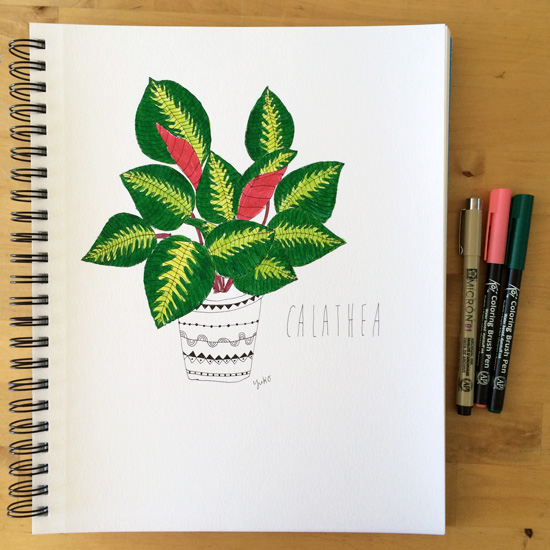
Calathea_550px
Calathea house plant drawing, Pigma Micron pen & Sakura Koi brush pens.
Heart-Leaf-Philodendron_550px
Heart Leaf Philodendron house plant drawing, Pigma Micron pen & Sakura Koi brush pens
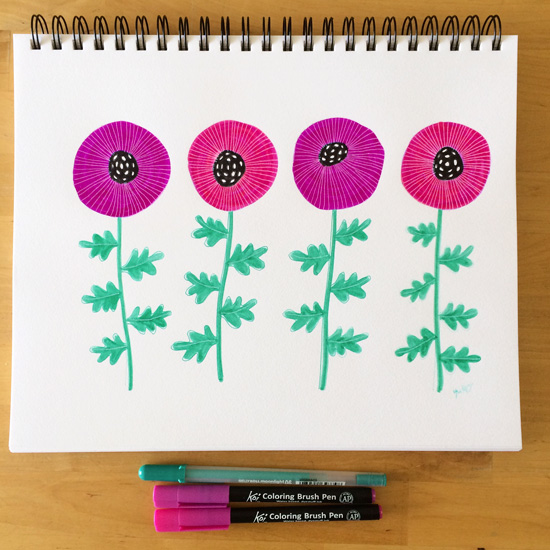
Pink,-Purple,-Green-Gellyroll_550px
Pink & purple poppies, Sakura Koi brush pens & Gellyroll pens.
Cat-doodles-04_550px
Cat faces! Pigma Professional brush pens.

By the way, out of the cat face doodles came the cat dad Father’s Day card below ๐Ÿ™‚

05_Cat-Dad-Father's-Day-Card-in-hand_550px
Cat dad card โค

Along with the lack of personal creative time and energy, I was feeling kind of discouraged about my creative business – wondering if I was cut out for it and if I would see any success – making a living doing what you love is really hard!!

I <3 Lisa.
I โค Lisa.

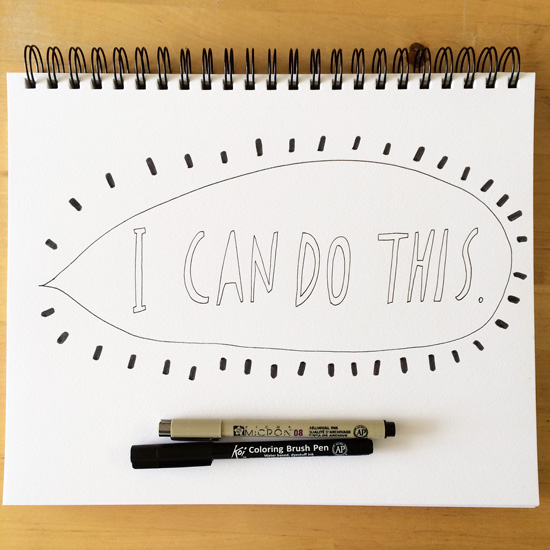
And then I went to see Lisa Congdon at her Joy of Swimming book reading in Seattle at the end of May and was totally inspired by her talk โค I came home with renewed energy and more confidence to keep working towards my big goal. So I doodled this the next day.

I-can-do-this_550px
I can do this. Pigma Micron pen & Sakura Koi brush pen.

Have a wonderful week, my friend!!!

xo Yuko

Yuko Miki Honeyberry Studios Headshot


My Vipassana 10-Day Silent Meditation Retreat Reflections

be-happy_1000px

I was at a Vipassana 10-day silent meditation retreat from June 1 through 12 in Onalaska, Washington!

And let me tell you… It was super intense.

I did my first Vipassana course about 3 years ago (you can read my experience here) andย was able to release and heal from so much pain and anger that I didn’t even know I had.

I just remembered how light I felt physically and mentally afterwards and had kind of forgotten how hard it was to get there!! ๐Ÿ˜€

During the 10-day retreat, you work very hard from 4:30 in the morning till 9 pm every day. It’s a “silent retreat” because you can’t have any verbal or non-verbal (no eye contact, gestures, or writing etc.) communications with your fellow students.

In case you’re wondering why I was gone for 12 days instead of just 10, it’s because the first and the last day and a half is not totally silent (= 10 days in the middle is the “silent” part). It’s a transition period so-to-speak,ย and I’m glad we had that time to transition to and from the retreat.

Here is what a typical day looks like:

4:00 am Morning wake-up bell
4:30-6:30 am Meditate in the hall or in your room
6:30-8:00 am Breakfast break
8:00-9:00 am Group meditation in the hall
9:00-11:00 am Meditate in the hall or in your room according to the teacher’s instructions
11:00-12:00ย noon Lunch break
12noon-1:00 pm Rest and interviews with the teacher
1:00-2:30 pm Meditate in the hall or in your room
2:30-3:30 pm Group meditation in the hall
3:30-5:00 pm Meditate in the hall or in your own room according to the teacher’s instructions
5:00-6:00 pm Tea break
6:00-7:00 pm Group meditation in the hall
7:00-8:15 pm Teacher’s Discourse in the hall
8:15-9:00 pm Group meditation in the hall
9:00-9:30 pm Question time in the hall
9:30 pm Retire to your own room–Lights out

Each day, you learn the technique and practice, practice, practice.

I found the first 3 days to be the most challenging because we just sit and practice the foundational breathing technique the whole time. Yup, sitting, breathing through your nose, and noticing your breath for like 10 hours a day…for 3 days.

I kept thinking “Wait, was it this hard last time?? Oh man, maybe I wasn’t ready for this… this is SO HARD!!! How many more days do I have to do this??”

And thenย on the 4th day you actually learn the Vipassana meditation techniques and start practicing them. And it starts to all make sense and becomes more engaging. It became more of a whole body experience, and all of a sudden, the time seemed to go by so quickly.

You build on the techniques every day, and at the end, you learn a slightly different meditation technique called Metta (= loving kindness, compassion) to close your practice, which is my favorite part!

During the 10+ days of sitting silently, I had many thoughts and reflections. Here are some of them:

1. It was not as earth-shattering as the first time.

Don’t get me wrong – it was still very challenging and amazing – but it didn’t feel as life-changing as I’d remembered my first retreat to be.

It makes senseย because I knew what to expect, and I’ve been doing a lot of cleansing and growing in the last 3 years.

I didn’t have nearly as many dark painful thoughts that came up during the meditation and did’t have nightmares like I did last time (I was waking up in the middle of the night terrified from a nightmare pretty much every night during my first retreat).

My life has changed a lot in the last 3 years – getting married, quitting my job to pursue art etc. – and though my life still has plenty of ups and downs, I wonder if these changes haveย helped me to keep my inner peace more than I realized?

2. I examined my relationship with food.

It may sound kind of silly, but I was so afraid of being hungry during the retreat.

When you’re an “old student,” meaning this is not your first course, you don’t get to have dinner. During the tea break at 5pm, you get to have tea, and that’s all you get between lunch and breakfast the following morning. I’ve been on a restricted diet as well and was afraid there wouldn’t be much I could eat.

They also recommend you only eat until 75% full at breakfast and lunch. It’s really hard to meditate when you’re full. This made my fear of being hungry even worse, but I followed the advice to see how it went.

To my surprise, it wasn’t really an issue.ย 

Since we were not physically active, I just didn’t get very hungry. They serve delicious organic vegetarian meals for breakfast and lunch, and with slight modifications I could eat almost everything. I occasionally got hungry later on in the evening, but by that time I was so wiped and just went to sleep no problem.

I survived just fine with two modest meals per day.ย Me not eating something every couple of hours. That’s wild.

It made me realize how much I’m tied up emotionally with food in my regular life.

I’ve been a little obsessed with food and diet for the last year or so. My intentions are good: I just want to improve and maintain my health through a healthy diet.

As a result, I think and read about food a lot. I spend a lot of time thinking about what I just ate, what to eat next, and how I’m going to prepare it. And I end up eating something frequently even though I’m not physically hungry. I often eat when I’m stressed, tired, or bored. And I feel bad when I do that even though I generally eat pretty healthy stuff.

Naturally, I thought about food a lot during my meditation ๐Ÿ˜€ I had all kinds of cravings and ideas of things to cook once I got home. And whenever I caught myself thinking about food, I tried to observe them without any judgement and notice my thoughts go away like the clouds passing through the sky.

I didn’t have to force it out of my head or feel bad about having those thoughts. I just sat with the thoughts and learned that they were just thoughts. They don’t have the power to make me do anything if I don’t give it.

Letting go of the control over food during the retreat was so freeing.

It’s interesting how you gain more control over yourself by caring a little bit less aboutย things you’ve held on to so tightly.

3. No-speaking part was more difficult.

During the last retreat, not being able to speak was not very difficult for me. In fact, I felt like I was in an introverts’ heaven! No small talk with strangers. No chit chat during meal time. I could just sit with my thoughts alone, and people didn’t think I was being rude or weird!

But this time it was more challenging.

It has a lot to do with the fact that I didn’t have a roommate last time (my roommate left on day 2…) so I wasn’t even tempted to talk to anyone really. But this time, I had a roommate, and when we met on the first day while we were still able to talk, I really liked her and wanted to get to know her better.

I wanted to ask her how she was doing and wanted to tell her what I was going through. I wanted to vent to her at the end of a long day and tell her about the beautiful snakes I saw on the walking path.

But I had to ignore her and keep everything to myself. And it was SO HARD.

I was very happy to finally talk with her after our noble silence was lifted on the 10th day, and we got to talk about our lives and laughed about certain annoying things people around us did during our meditation ๐Ÿ˜€

4. I learned to be OK with not remembering/knowing/sharing everything.

When your mind gets uncluttered, you’re bound to come up with brilliant ideas.

I had many ideas for creative projects and my business during the meditation, and it was painful not to be able to write them down! You see, not only can’t you speak to other students, but you also can’t write, read, or draw during the retreat!!

At first I tried to hold on to all the cool ideas I came up with in my head, but it was just too difficult.

So I decided to trust that whatever I needed to remember would be in my head when I need it and let go of the rest.

And often an idea would pop in my head during the meditation, and I’d think, “oh, I need to look it up!” and realized I didn’t have my phone… Or I’d see a perfect pantone-colors-of-the-year evening sky and think “oh, it’s so gorgeous! I need to share it on Facebook!” and realized I didn’t have my phone… ๐Ÿ˜€ Or I’d be thinking of an Instagram caption to describe the delicious marinaded tofu I had for lunch…

This happened more times than I want to admit. It made me realize how much I relied on the technology to give me an answer to everything and how I’d become addicted to the instant gratification of sharing contents on social media.

Technology and social media are not evil. They can be a very useful tool, and I’m grateful for them! Being without them for 10 days just gave me a pause to notice how I’d taken it for granted. I’ll be more mindful about my relationships with these tools as well!

5. It helped me to create more space for love and compassion in my heart.

The main goal of the Vipassana meditation is to learn that nothing is permanent and develop your ability to see thing as they are, not as you’d like it to be.

By experiencing the law of impermanence through your continued practice, you’ll be able to detach yourself emotionally from things that cause you cravings (e.g. “This cake is delicious. I wish I could eat it every day for the rest of my life.”) or hatred (e.g. “Why did Betty in accounting have to make that snide comment during the staff meeting last week? What did I ever do to her? Does she think I’m incompetent because I made that one mistake a couple of months ago? Grrrrr!!”).

The less reactive you become towards these situations, theย happier and more content you will be in the moment.

Late Mr. Goenka, the foremost lay teacher of the Vipassana meditation techniques, talks about how it’s easy to care about and feel compassionate towards those who you perceive to be your friends, but the ones who need it the most is those who you perceive to be your enemies.

Have compassion for people who have done harm to others, he says, because they live in such misery, holding on to tremendous amount of anger, hatred, and fear.

And when you harm others, you’re actually doing more harm to yourself.

This is such a powerful and healing message. It’s definitely not an easy thing to do, but it’s something I’d like to live by. I know that meditating for 10 days won’t change anyone into a saint, but it’s a start.

For instance, I noticed a slight change in my reaction to a dreadful situation right after I left the retreat. I was driving back up the I-5 towards Seattle and saw a billboard sign that’s always been there for as long as I can remember. It stands right by the freeway and always has a pretty racist or homophobic message on it. ย It’s bothered me whenever I drove passed it.

It makes me very angry that some people feel OK to act out on their blatant oppressive beliefs, and I don’t get to choose if I’m being subjected to it or not.

But this time, my mind was calmer – I saw the sign, read their racist message (and they’re on top of updating their messages regularly, too) and felt sad towards whoever put up the sign. Whoever this person is lives in such fear and anger that they feel they need to do this. They’re so ignorant and choosing to stay miserable. How sad to live like that??

While I don’t approve any acts of violence or oppression, I was able to keep their nasty message from entering my heart. I didn’t want to allow them to plant a seed of hatred towards them inside me. In that moment, I was able to fill my heart with compassion, and itย acted as a radiant shield. It was a very powerful experience.

So, now what?

After you finish your 10-day course, they encourage you to continue your practice at home. They say you should do one hour of sitting in the morning and one hour of sitting in the evening every day so you can continue toย receive the benefits from it.

After my last retreat, I was diligently following that for about 3 months. Then life happened (namely my wedding!) and it was too stressful to fit in two hours of meditation every day. I was sleepy, tired, and grumpy, which is opposite of what you want to happen! So I quit practicing all together and felt guilty about it for a while… ๐Ÿ˜ฆ

This time I’ll do my best to continue my practice but with more flexibility and grace. I’ve been waking up one hour early to meditate in the morning and doing a shorter sit in the afternoon-evening, usually between work and dinner.

If I can’t do it every day, though, I’mย not going to beat myself up about it. I figured it’s more important to continue the practice long term even if it’s in less-than-perfect form than quitting all together.

I also found a new Vipassana community in Seattle that does a weekly group sit at someone’s house and plan on joining them from time to time. It’ll be a good way to build a supportive community and will provide on-going accountability, too.

I’ve been gradually transitioning back in to my “normal” life and taking it a bit slow this week even though I have a ton of work to do. Fortunately, my meditation is helping me not to freak out about it. At least for now… ๐Ÿ™‚

Are you a meditator? If so, I’d love to hear how you incorporate your practice in your regular life. Do you have a favorite time/place to do it? What motivates you to keep practicing? Please tell me in the comment!

p.s. if you’re interested in the Vipassana meditation retreat, they have many retreat centers ย all over the world! You can check them out here.

Be happy,

xo Yuko

Yuko Miki Honeyberry Studios Headshot